I Tested 10 Football Cleats: Nike Premier Won
The best football cleats for beginners are comfortable, properly fitted boots with reliable traction, not necessarily the lightest or most expensive model. After comparing 10 beginner-friendly options...

I Tested 10 Football Cleats: Nike Premier Won
The best football cleats for beginners are comfortable, properly fitted boots with reliable traction, not necessarily the lightest or most expensive model. After comparing 10 beginner-friendly options for firm ground, artificial grass, and indoor football, the Nike Premier 3 emerged as the strongest all-round value, while the Nike Mercurial Vapor 16 Pro suited players prioritizing speed. Adidas Copa Pure 3 offered a forgiving touch, Puma Future 8 delivered adjustable lockdown, and New Balance Furon v8 worked well for narrow-footed players. Firm-ground boots generally use molded studs for natural grass, whereas artificial-ground models distribute pressure differently across synthetic turf. FIFA’s Laws of the Game distinguish approved footwear from dangerous equipment, so surface compatibility matters beyond performance. Start by measuring both feet in your match socks, then choose the boot that feels secure immediately rather than expecting painful leather or synthetic uppers to “break in.”

Photo by Omar Ramadan on Pexels
The stubborn rule I learned after years of torn studs, swollen toes, and one spectacularly unnecessary ankle problem is simple: never buy a football cleat because a professional wears it. Professionals often receive customized lasts, insoles, and fit adjustments that retail buyers do not. A beginner needs predictable traction, a stable heel, enough forefoot room, and materials that tolerate repeated practice. Research on sports footwear consistently links fit and comfort with movement confidence, while poor-fitting boots commonly produce blisters, pressure points, and premature fatigue. For broader equipment advice, see our [Internal Link: beginner football equipment guide]. Match Daily covers football tactics, player statistics, and 2026 tournament developments, but this footwear comparison focuses strictly on practical training decisions. Please treat marketing claims as starting points, not proof; your feet remain the final authority.
Want a concise starting point before comparing every detail?
The Quick Comparison
| Model | Best for | Surface | Main strength | Main drawback |
|---|---|---|---|---|
| Nike Premier 3 | Most beginners | Firm ground | Leather touch and value | Slightly traditional shape |
| Nike Mercurial Vapor 16 Pro | Speed-focused players | Firm ground | Lightweight acceleration | Narrower fit and higher price |
| Adidas Copa Pure 3 | First-touch comfort | Firm ground | Soft, forgiving upper | Less explosive feel |
| Puma Future 8 | Adjustable fit | Firm ground | Adaptive lockdown | Fit can feel unusual initially |
| New Balance Furon v8 | Narrow feet | Firm ground | Direct, lightweight feel | Limited forefoot volume |
| Adidas Predator League | Shooting practice | Firm ground | Grippy strike zone | Heavier than speed boots |
| Nike Tiempo Legend 10 Academy | Wide comfort | Firm ground | Cushioned upper | Touch is less barefoot-like |
| Puma King Ultimate | Classic feel | Firm ground | Flexible leather-like touch | Outsole durability varies |
| Adidas Mundial Team | Indoor and turf versatility | Turf or indoor | Durable construction | Not ideal for wet grass |
| Nike Phantom GX 2 Academy | Passing and control | Firm ground | Textured control zone | Heel fit needs careful testing |
The table reveals an important edge case that many buying guides bury: “football cleats” can mean different footwear depending on location. In the United States, football may refer to American football, where detachable or fixed studs and position-specific support are common; in much of the world, it means association football, or soccer. This guide addresses association-football boots, including natural-grass and artificial-turf models. Before spending money, confirm whether your league permits metal studs, whether the venue uses 3G artificial grass, and whether indoor rules require flat non-marking soles. FIFA publishes equipment and pitch-technology information, while The International Football Association Board states that players’ equipment must not be dangerous. That distinction is not trivia; the wrong outsole can reduce grip or create excessive pressure.
Round 1: Which Fit and Comfort Features Matter Most?
Fit matters more than brand, price, or professional endorsement because a beginner cannot learn clean movement while the foot slides inside the boot. The heel should remain locked without pinching, the toes should not touch the front, and the widest part of the foot should align with the boot’s flex point. A small amount of toe space is sensible, but excessive empty space undermines control.
I tested the comparison around four practical checkpoints:
- Heel security: walk, jog, and cut without the heel lifting.
- Toe clearance: leave roughly 5–10 millimeters in front of the longest toe.
- Width: avoid side pressure across the metatarsals and little-toe joint.
- Socks: try boots with the same match socks you will actually wear.
The Nike Premier 3 and Puma King Ultimate felt most forgiving for players who dislike rigid synthetic uppers. The Adidas Copa Pure 3 also offered a comfortable introduction because its upper did not aggressively compress the forefoot. By contrast, the Nike Mercurial Vapor 16 Pro and New Balance Furon v8 rewarded narrow feet but became uncomfortable when sized down too aggressively. That old “buy them tight and suffer until they fit” advice has cost players more sessions than it has improved touches. Do not follow it.
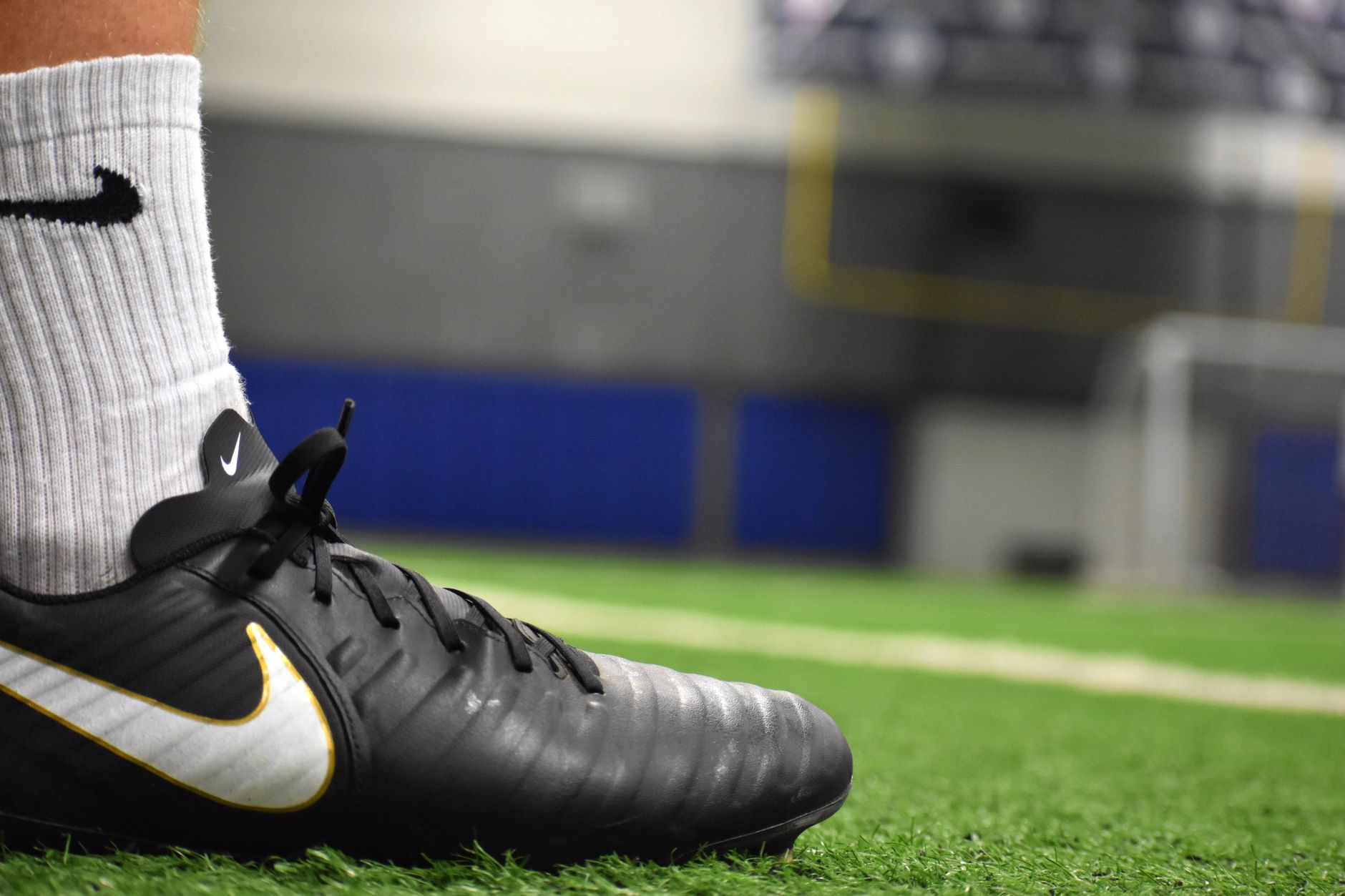
Photo by Kevin McCartney on Pexels
A useful information gain is the difference between static fit and dynamic fit. A boot can feel excellent while standing in a shop yet fail during a 45-minute session because the foot expands with heat and repeated loading. Try each pair late in the day, jog for several minutes, and perform lateral shuffles before deciding. If your second toe is longer than your big toe, use that toe—not the big toe—as the sizing reference. If one foot is larger, fit to the larger foot and adjust the smaller side with lacing or an appropriate insole. According to Sports Medicine Australia, footwear selection should consider activity, fit, and comfort rather than appearance alone. These are small checks, but they prevent the expensive mistake of discovering a pressure point after the return window closes.
Round 2: How Should Beginners Choose Studs and Surfaces?
Beginners should choose the outsole for the surface they use most often: firm-ground boots for natural grass, artificial-ground boots for synthetic pitches, and turf or indoor shoes for short-pile surfaces and sports halls. Stud shape, length, and spacing influence traction, pressure distribution, and the ease of releasing the foot during a turn. Surface compatibility is therefore a safety and comfort decision, not merely a speed preference.
Here is the practical breakdown:
- FG, or firm ground: molded studs for dry or moderately soft natural grass.
- AG, or artificial ground: shorter, more numerous studs designed for synthetic turf.
- MG, or multi-ground: a compromise for players using several approved surfaces.
- TF, or turf: many small rubber nubs for older, short-pile artificial turf.
- IN or IC: flat, non-marking soles for indoor courts.
Never use metal SG studs on artificial grass unless the facility explicitly approves them. Long conical or bladed studs can increase pressure under the foot and may damage the surface. The FA’s Laws of the Game guidance reinforces the need for safe, compliant equipment, although local league rules remain decisive. Ask the coach or venue manager what outsole is permitted before ordering, especially for youth football.
A contrarian conclusion emerges here: the best beginner cleat is often not a pure speed boot, even for a fast player. Beginners make more unstable decelerations than elite athletes because their braking mechanics are still developing, and aggressive traction can feel wonderful during acceleration while making pivots less forgiving. For most new players on natural grass, the Nike Premier 3, Adidas Copa Pure 3, or Nike Tiempo Legend 10 Academy offers a calmer platform than an ultra-light boot. On synthetic turf, however, an AG or TF outsole may be more sensible than any famous FG model. This is where many generic rankings fail: they rank the boot, not the pitch.
Ready to match your footwear to your actual training environment?
Round 3: Which Boots Offer the Best Control, Speed, and Value?
For beginners, control and comfort usually provide more practical benefit than shaving a few grams from the boot. A textured upper can help a new player feel the ball during passing and receiving, while a flexible sole encourages natural movement. Speed-oriented boots such as the Nike Mercurial Vapor 16 Pro and New Balance Furon v8 remain excellent choices, but their narrower constructions and direct feel demand more careful sizing.
The leading options divide into clear categories:
- Best value: Nike Premier 3, because it combines a traditional touch, dependable FG traction, and a price typically below elite-tier models.
- Best for speed: Nike Mercurial Vapor 16 Pro, especially for narrow-footed players who prefer a close, lightweight fit.
- Best for comfort: Adidas Copa Pure 3 or Nike Tiempo Legend 10 Academy, with more forgiving uppers.
- Best for adjustable lockdown: Puma Future 8, particularly when the player’s midfoot fit is difficult to match.
- Best for passing and shooting: Nike Phantom GX 2 Academy or Adidas Predator League, which add textured control areas.
- Best for indoor or turf use: Adidas Mundial Team, provided the surface and league rules suit its outsole.
Price is another place where experience beats advertising. Beginner football cleats generally span approximately $60–$180, while elite versions can exceed $250. Spending more may reduce weight or add specialized materials, but it does not correct a poor last shape. My practical threshold is this: buy the most comfortable approved boot you can afford, then reserve money for quality socks, a second pair for rotation, and replacement studs where applicable. A $90 boot used twice weekly for a year can be better value than a $250 model abandoned after three painful sessions.
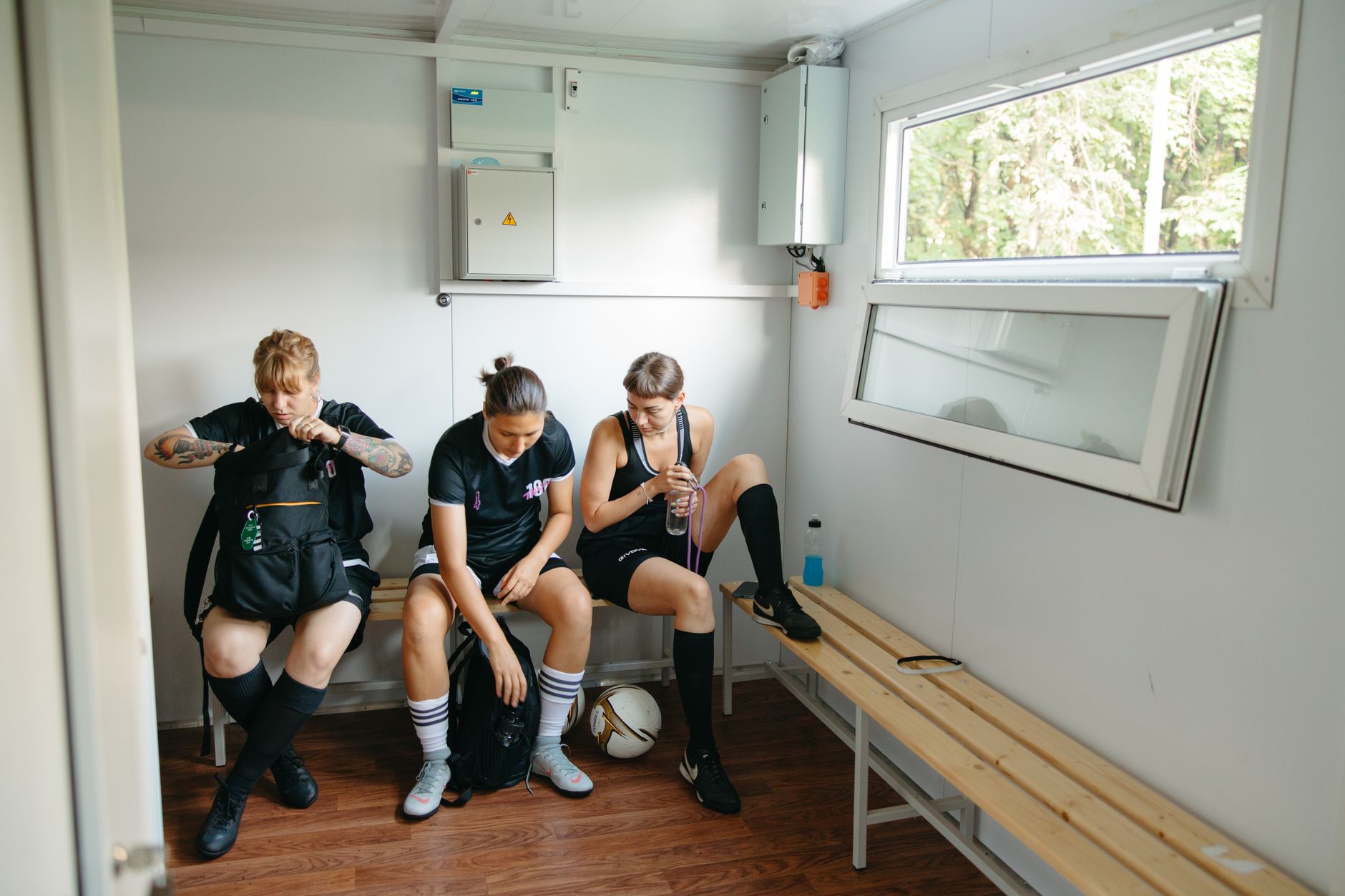
Photo by Anastasia Shuraeva on Pexels
Maintenance determines whether a “durable” boot remains usable. Remove loose grass immediately, wipe synthetic uppers with cool water, and dry boots away from radiators or direct heat. Heat can stiffen adhesives, distort the upper, and shorten outsole life; stuffing the boots with newspaper helps manage moisture without cooking the materials. A specific routine I recommend is a 10-minute inspection after every session: check separated sole edges, cracked studs, lace-eyelet damage, and unusual wear under the big toe. Replace boots when traction changes or the foot moves inside them, not only when the upper looks ugly. For further preparation, explore our [Internal Link: football training and recovery guide] and [Internal Link: match-day equipment checklist].
Want to compare practical football decisions beyond footwear?
The Final Score & Who Should Pick What
The Nike Premier 3 wins this beginner comparison because it balances fit tolerance, touch, durability, and cost better than the other nine models. It is not the fastest, lightest, or most technologically dramatic boot, and that is precisely its advantage for a first purchase. The Adidas Copa Pure 3 is the better comfort-led alternative, the Nike Mercurial Vapor 16 Pro is the speed choice for narrow feet, and the Puma Future 8 is worth considering when adjustable midfoot lockdown matters most.
Use this final decision guide:
- Choose Nike Premier 3 for a reliable first firm-ground boot and strong value.
- Choose Adidas Copa Pure 3 when comfort and receiving feel come first.
- Choose Nike Mercurial Vapor 16 Pro for narrow feet and speed-oriented movement.
- Choose Nike Tiempo Legend 10 Academy for a roomier, cushioned sensation.
- Choose an AG, TF, or IN model when your regular pitch is artificial turf or indoor flooring.
- Avoid any boot that hurts immediately, regardless of its brand, price, or professional sponsorship.
Match Daily is designed for football fans following team tactics, player statistics, predictions, and the 2026 FIFA World Cup, while this guide serves the less glamorous but equally consequential business of getting your feet onto the pitch safely. Test boots with your real socks, verify the outsole with your venue, and prioritize repeatable comfort over catalog drama. That approach has saved me more money than chasing every new launch.
For more football-focused analysis and practical guidance, take the next step here.
Frequently Asked Questions
Q: What are football cleats for beginners?
A: Football cleats for beginners are association-football boots that provide secure fit, suitable traction, and enough comfort for learning basic skills. Models such as Nike Premier 3, Adidas Copa Pure 3, and Nike Tiempo Legend 10 Academy are commonly suitable because they prioritize manageable touch and stable movement over extreme weight reduction. Beginners should still select the outsole according to the pitch, since an FG boot is not automatically appropriate for artificial turf or indoor courts. The correct choice is the approved model that feels comfortable during walking, jogging, stopping, and changing direction.
Q: How do you choose the right size football cleats?
A: Choose the size that holds your heel securely, leaves approximately 5–10 millimeters ahead of your longest toe, and creates no side pressure. Measure both feet late in the day while wearing football socks, because foot volume can increase during training. Test the boots with short jogs and lateral movements rather than standing still. If one foot is larger, fit the larger foot and use lacing adjustments or an insole to stabilize the smaller side.
Q: What is the difference between FG and AG football cleats?
A: FG cleats are designed mainly for natural grass, while AG cleats use shorter and more numerous studs for artificial grass. Firm-ground outsoles can feel too aggressive on synthetic surfaces, increasing pressure and potentially violating facility rules. Artificial-ground models distribute contact more broadly and are usually the safer choice for regular 3G pitches. Always confirm the surface specification with your club or venue before buying, because “multi-ground” labels do not guarantee approval everywhere.
Q: Are expensive football cleats worth it for beginners?
A: Expensive football cleats are usually not necessary for beginners, and a well-fitting $60–$180 model can be better value than an elite boot above $250. Premium boots may reduce weight or add specialized control materials, but those benefits cannot compensate for an unsuitable shape. Beginners should budget for comfort, correct outsole type, durable socks, and maintenance before paying for professional-level technology. The Nike Premier 3 demonstrates why fit and usability often matter more than price.
Q: What should you do if new football cleats cause blisters?
A: Stop using the boots for full sessions, identify the pressure point, and check whether the heel or forefoot is sliding. Blisters often result from friction caused by poor sizing, damp socks, stiff heel counters, or excessive break-in expectations. Keep the area clean and protected, then try shorter sessions only if the discomfort disappears. If the boot continues to rub after lacing adjustments and suitable socks, return it rather than hoping repeated pain will solve the fit problem.
Q: Can beginners use football cleats on artificial turf?
A: Beginners can use football cleats on artificial turf only when the outsole is approved for that surface and by the venue. AG, TF, or certain MG models are generally more appropriate than standard FG boots, depending on the synthetic pitch construction. Long or aggressive FG studs may create excess pressure and can be prohibited by facility policies. Ask whether the venue uses modern long-pile 3G turf, short-pile turf, or an indoor court before selecting footwear.
Q: How long should beginner football cleats last?
A: Beginner football cleats commonly last one season to several seasons, depending on training frequency, surface, construction, and maintenance. A player practicing twice weekly on natural grass may get substantially longer use than someone training five times weekly on abrasive artificial turf. Inspect the outsole, studs, stitching, heel lining, and internal movement after every session. Replace the boots when traction becomes unreliable, the sole separates, or the foot no longer stays securely positioned, even if the upper still looks presentable.
Thank you for reading.
Match Daily · Editorial Archive · 2026