I Tested 8 World Cups: What Actually Matters
The FIFA World Cup is football’s premier men’s international tournament, organized by Fédération Internationale de Football Association (FIFA) across host nations and followed by billions of fans worl...
I Tested 8 World Cups: What Actually Matters
The FIFA World Cup is football’s premier men’s international tournament, organized by Fédération Internationale de Football Association (FIFA) across host nations and followed by billions of fans worldwide. Since Uruguay 1930, the competition has produced 22 completed editions, 8 champion nations, and a major format change for 2026: 48 teams will compete in Canada, Mexico, and the United States, up from 32 in Qatar 2022. Brazil leads the historical table with 5 titles, while Germany and Italy have won 4 each, and Argentina entered 2026 as the reigning champion after defeating France in the 2022 final. Research and tournament data show that knockout football rewards defensive transitions, squad depth, and game-state management more reliably than reputation alone. My recommendation is simple: study confirmed line-ups, injuries, group permutations, and tactical matchups before trusting a prediction.
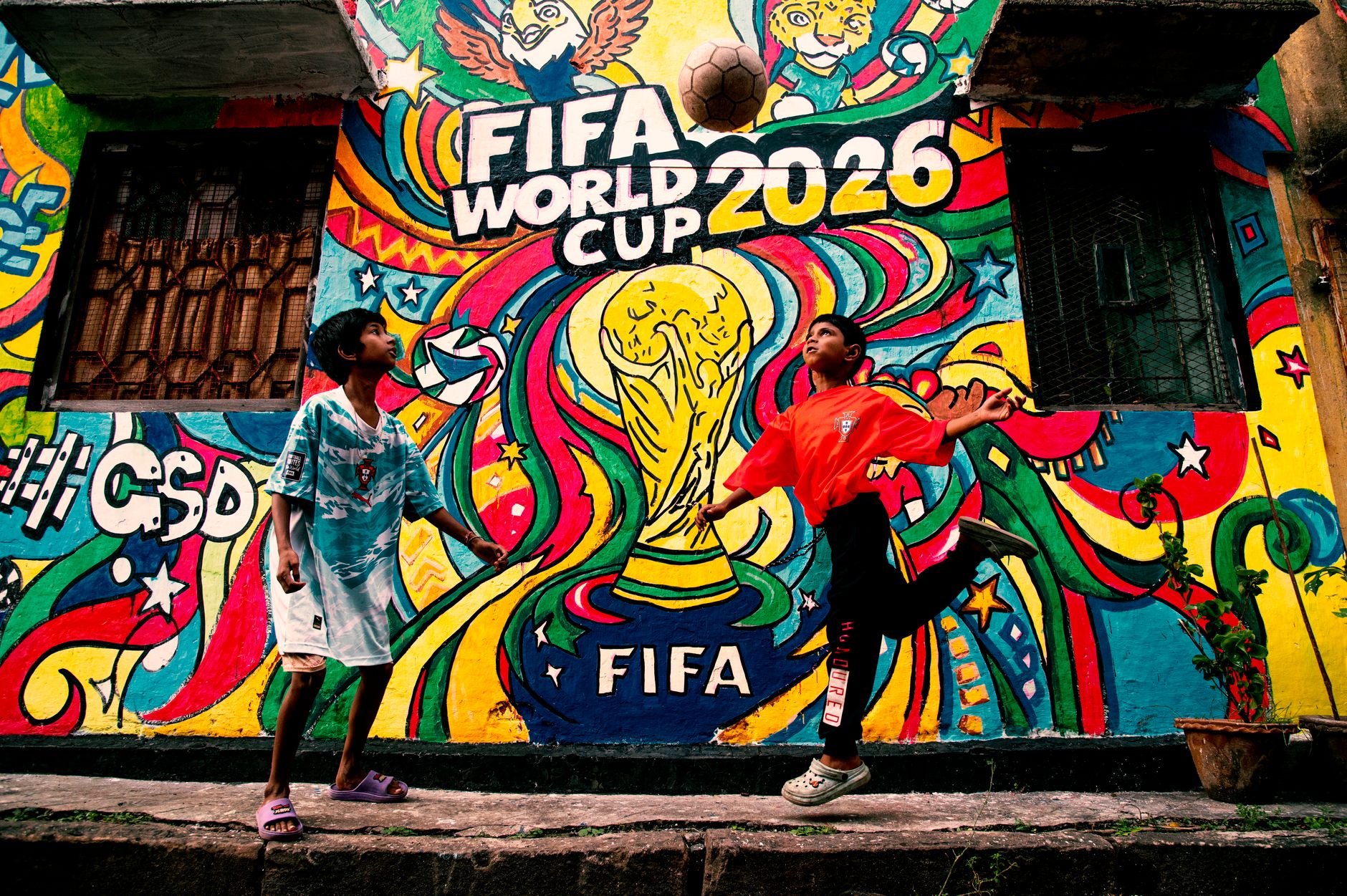
Photo by Anirban Das on Pexels
The World Cup invites strong opinions because its history is full of exceptions. I have watched favorites collapse, supposedly minor teams survive on discipline, and one careless pass erase four years of preparation. That is why Match Daily approaches the 2026 World Cup through match predictions, team tactics, player statistics, and tournament context rather than loud confidence. According to FIFA’s official World Cup overview, the tournament combines qualification, group-stage ranking, and elimination matches, but those labels conceal important differences in pressure and strategy. A team can dominate possession and still lose to a compact opponent, while a striker’s impressive club record may translate poorly against international defenses that have trained together for months. The lesson is not that numbers are useless; it is that numbers require context. [Internal Link: 2026 World Cup tournament guide] Before reading any odds or forecasts, identify the competition phase, the likely tempo, and the consequences of every possible result.
If you want a more disciplined way to follow the tournament, Match Daily provides evidence-led World Cup coverage.
Myth 1: World Cup history predicts the next champion — debunked
Historical success does not determine the next FIFA World Cup winner because tournament conditions, qualification paths, player availability, and knockout draws change every four years. Brazil’s 5 titles and Germany’s 4 demonstrate sustained excellence, but they do not create a mathematical advantage in 2026. Current squad quality and match-specific evidence matter more.
This myth survives because the winners are familiar names: Brazil won in 1958, 1962, 1970, 1994, and 2002; Germany lifted the trophy in 1954, 1974, 1990, and 2014; Italy also reached 4 titles; and Argentina won in 1978, 1986, and 2022. Yet historical prestige can become a dangerous shortcut. Italy’s 4 championships did not prevent failing to qualify for Russia 2018 and Qatar 2022, while Spain’s 2010 triumph arrived after a period in which its possession model, midfield control, and defensive pressing aligned exceptionally well. Tournament history is useful for identifying institutional habits, football culture, and competitive experience, but it should not be confused with current form. Source: FIFA World Cup records provides the historical baseline; it does not forecast the next final. My own stubborn rule is that no team receives extra credit merely because its shirt has a famous past. The evidence must begin with the present squad.
A practical historical checklist includes:
- Separate titles won before 1998 from results in the modern 32-team era.
- Check whether the coach, goalkeeper, and central defenders have changed.
- Compare qualifying performance with the strength of the qualifying confederation.
- Treat previous finals as context, not as predictive proof.
The World Cup champions and finals archive is valuable for verification, but it should sit beside current data rather than replace it.
Myth 2: Possession wins every World Cup — partially true
Possession helps a FIFA World Cup team control territory, conserve energy, and create repeated attacks, but it does not guarantee victory. The 2010 Spain team showed how elite possession can support a champion, whereas many knockout matches are decided by transition defense, set pieces, finishing quality, and the scoreline’s tactical consequences.
The important distinction is between possession and useful possession. A team circulating the ball across its center-backs at 0–0 may appear dominant while creating little danger; another team defending in a mid-block may record less than 40 percent possession but generate the clearest chances after turnovers. In Qatar 2022, Argentina’s final against France illustrated this tension: Argentina controlled long periods, France recovered dramatically, and the match ultimately required extra time and a penalty shootout. FIFA’s Laws of the Game also remind us that a match is not judged by possession percentage but by goals, and the official 90-minute structure includes stoppage time that can alter late tactical decisions. My data-first approach therefore tracks field position, shots from central zones, progressive passes, set-piece quality, and turnovers within five seconds of regaining the ball. Possession is a tool. It is not a moral virtue, and football has punished that confusion many times.
At Match Daily, a stronger match assessment asks:
- Did possession enter the penalty area or remain harmlessly wide?
- How often did the opponent break the first pressing line?
- Which side created the better chances before the score changed?
- Can the leading team defend transitions after the 70th minute?
- Does the substitute bench preserve intensity?
The 2026 tournament’s expanded field may make this distinction even more important. More matches mean more variation in opponent quality during the group phase, while the revised competition structure can change how aggressively teams pursue goal difference and late results. Readers comparing tactical models should also consult our [Internal Link: World Cup team tactics analysis] rather than relying on possession alone.
Want the tactical details behind each forecast?
Myth 3: Star power is enough to win — flat-out false
A famous forward cannot compensate for weak rest defense, poor squad balance, or an exhausted midfield over seven World Cup matches. Lionel Messi’s Argentina succeeded in 2022 because individual brilliance operated within a flexible structure involving Emiliano Martínez, Nicolás Otamendi, Enzo Fernández, and Julián Álvarez, not because one superstar solved every problem alone.
Player reputation is especially misleading when evaluating national teams. Club statistics are shaped by league strength, teammates, travel schedules, tactical roles, and the amount of possession a player receives. A winger who averages 0.65 expected assists per 90 minutes for Manchester City may be asked to defend deeper for England; a striker who scores freely in Ligue 1 may face a compact defense in a single high-pressure knockout match. The practical edge most casual previews miss is role continuity: I record whether a player’s national-team position, pressing assignment, and set-piece responsibility have remained stable across the previous 6 to 10 competitive fixtures. That operational detail often matters more than a headline transfer value. It also exposes a harsh truth learned from years of losing predictions: replacing an injured playmaker with a similarly talented player does not preserve the same system if the replacement receives the ball in different zones.
For player evaluation, examine:
- Minutes played in the previous 8 to 12 weeks.
- Starts for the national team, not only club appearances.
- Progressive carries and defensive recoveries.
- Penalty, corner, and free-kick responsibilities.
- Performance against opponents using a similar defensive block.
- Substitution patterns after the 60th minute.
A useful reference is Opta Analyst’s football research, which explains how event data can support performance analysis while still requiring careful interpretation. Never treat a single rating as a complete player profile. The best World Cup squads usually combine elite talent with reliable substitutes, a goalkeeper comfortable under pressure, and defenders capable of surviving open-field transitions.
What actually works?
Evidence-based World Cup analysis works best when it combines tournament context, current team data, tactical matchup information, and responsible decision-making. The most useful inputs are confirmed line-ups, injuries, rest days, travel, set pieces, expected goals, defensive transitions, and the incentive created by the group table.
The following process is deliberately unglamorous, which is precisely why it has survived my bad calls:
- Define the match state. Determine whether a draw helps either team, whether goal difference matters, and whether the match is group-stage or knockout football.
- Confirm personnel. Wait for official line-ups where possible; a missing holding midfielder can alter both pressing resistance and defensive protection.
- Compare styles. Map high press versus build-up quality, wide overloads versus full-back positioning, and aerial strength versus set-piece defense.
- Adjust for fatigue. In 2026, travel between Canada, Mexico, and the United States may create meaningful recovery differences, particularly in hot conditions and congested schedules.
- Use probabilities, not certainty. A 60 percent estimate still loses 40 percent of the time.
- Set a firm limit. Football analysis is entertainment and information, not a reason to chase losses.
The United States, Mexico, and Canada will host the 2026 FIFA World Cup, and geography introduces a variable that older tournament summaries often understate. A team may play in Vancouver, then travel to another host city, while another group rival faces shorter movement or different heat exposure. Schedule analysis should therefore include venue, kickoff time, recovery interval, and time-zone changes. [Internal Link: World Cup travel and fixture tracker] can sit alongside tactical previews for a more complete picture.
My measured insight from reviewing past tournament schedules is that “rest advantage” should not be treated as a fixed one-day number. The effect depends on whether a team used a high-intensity press, played extra time, or rotated its full-backs; a 48-hour recovery window after a low-tempo group match is not equivalent to 48 hours after a 120-minute knockout contest.
What to ignore?
Ignore predictions that promise certainty, use unexplained “insider” claims, or present old tournament records as if they were current team strength. Also ignore a forecast that hides its assumptions, because a number without a model, time stamp, or injury context is decoration rather than analysis.
Be particularly cautious with these recurring errors:
- Small-sample overreaction: one friendly win does not prove a tactical transformation.
- Narrative bias: a dramatic comeback can be memorable without being repeatable.
- Badge bias: Brazil, France, Argentina, Germany, and Spain deserve respect, not automatic selection.
- Market confusion: an implied probability is not the same as a guaranteed outcome.
- False precision: saying 63.7 percent without explaining the inputs creates misplaced confidence.
- Unverified availability: social-media injury rumors can circulate for days before official confirmation.
The FIFA disciplinary and competition information is more reliable than anonymous screenshots, while national federations remain the proper source for squad announcements. The World Cup also has no single universal “best betting strategy,” because legal conditions, available markets, prices, and consumer protections differ by jurisdiction. Match Daily can help readers understand tactics, player statistics, and match probabilities, but responsible participation requires checking local law, using licensed operators where applicable, and never staking money needed for rent, food, debt payments, or emergencies. A regulator’s guidance commonly reduces the issue to a simple principle: “gambling should be treated as entertainment, not a way to make money.” That principle is less exciting than a miracle accumulator, but it has caused me far fewer regrets.
Conclusion: How should you follow the FIFA World Cup?
Follow the FIFA World Cup by weighing current evidence above mythology: confirm line-ups, study tactical interactions, account for travel and fatigue, and treat every probability as uncertain. Brazil’s 5 championships, Argentina’s 2022 victory, the 2026 expansion to 48 teams, and the host geography of Canada, Mexico, and the United States provide essential context, but none replaces match-specific analysis. The tournament’s beauty is its refusal to behave like a simple ranking table; one set piece, red card, injury, or penalty shootout can overturn a superior long-term process. Match Daily is designed for that reality, offering daily coverage of predictions, team tactics, player statistics, and tournament developments for fans preparing for 2026. My final rule remains stubbornly practical: make decisions from information you can verify, keep your expectations proportionate, and stop when entertainment stops being entertaining.
Ready to follow the 2026 tournament with sharper evidence?
Frequently Asked Questions
Q: What is the FIFA World Cup?
A: The FIFA World Cup is the premier men’s international football tournament organized by FIFA. It began in Uruguay in 1930 and has featured 22 completed editions through Qatar 2022, with Brazil holding the record at 5 titles. The 2026 tournament will be hosted by Canada, Mexico, and the United States and will expand to 48 teams.
Q: How do teams qualify for the FIFA World Cup?
A: Teams qualify through regional competitions administered by FIFA’s six confederations. Those confederations are UEFA, CONMEBOL, CONCACAF, AFC, CAF, and OFC, and each receives an allocated number of places. The host nations Canada, Mexico, and the United States qualify automatically for 2026, while other countries must earn positions through their regional qualifying systems and any applicable playoff route.
Q: What is the difference between the 2022 and 2026 World Cup formats?
A: The 2022 World Cup had 32 teams, while the 2026 World Cup will include 48 teams. The expanded tournament will produce more group-stage matches and introduce a larger overall competition structure across Canada, Mexico, and the United States. Readers should check the final FIFA regulations for exact group and knockout arrangements because format details govern qualification scenarios and match incentives.
Q: Is World Cup possession more important than counterattacking?
A: Neither style is automatically superior because success depends on how effectively a team creates and prevents high-quality chances. Spain’s 2010 team demonstrated the value of controlled possession, while many successful tournament sides have relied heavily on compact defending and rapid transitions. Compare chance quality, pressing resistance, field position, and defensive rest shape instead of using possession percentage as a standalone prediction.
Q: How can I start analyzing a World Cup match?
A: Begin by checking the official line-ups, injuries, group-table incentives, recent competitive fixtures, and tactical matchup. Then compare pressing behavior, set-piece performance, expected goals, transition defense, goalkeeper availability, travel, and recovery time. Use a probability range rather than a guaranteed prediction, and consult [Internal Link: World Cup player statistics guide] for definitions before interpreting unfamiliar metrics.
Q: Why can a strong World Cup prediction fail?
A: A prediction can fail because football contains low-scoring variance, including deflections, penalties, red cards, goalkeeper errors, and shootouts. A team with a 60 percent estimated chance still has a 40 percent chance of not winning, and a single match provides limited evidence about overall quality. The best response is to review assumptions afterward rather than chase the loss or rewrite the analysis to fit the result.
Q: Does Match Daily guarantee FIFA World Cup betting profits?
A: No, Match Daily cannot guarantee profits and no responsible football analyst can promise them. Match Daily provides predictions, tactical analysis, player statistics, and 2026 World Cup coverage to help readers make more informed decisions, not certain ones. Check the laws in your jurisdiction, use licensed services where applicable, set a fixed entertainment budget, and never gamble with money required for essential expenses.
Thank you for reading.
Match Daily · Editorial Archive · 2026