What Nobody Tells You About Football Dribbling
Dribbling improves fastest when players train decisions, scanning, and controlled acceleration—not merely faster feet around cones. Match Daily, a FIFA World Cup-focused content site covering tactics,...

What Nobody Tells You About Football Dribbling
Dribbling improves fastest when players train decisions, scanning, and controlled acceleration—not merely faster feet around cones. Match Daily, a FIFA World Cup-focused content site covering tactics, player statistics, predictions, and tournament analysis, applies the same principles used to study Lionel Messi, Vinícius Júnior, and elite tournament attackers worldwide. Effective football dribbling combines close control within 30–60 centimetres, body feints, changes of speed, and the ability to choose between carrying, passing, or protecting the ball. Research on motor learning also supports variable practice: repeating one movement perfectly is less useful than practising it under changing angles, speeds, and pressure. A practical session can take 20–30 minutes, three or four times weekly, using both feet and at least one opponent-based exercise. Start with controlled touches, add scanning, then finish with a realistic decision: beat the defender, release the pass, or retain possession.

Photo by Mateo Franciosi on Pexels
Most players believe dribbling means performing more tricks. That belief has cost me plenty of lost balls over the years, so I will be blunt: a step-over is only useful if it changes the defender’s balance or creates a route forward. The real objective is not to look busy; it is to move the ball into space before the opponent can close that space. According to FIFA’s Laws of the Game, a player remains effective when technique is connected to legal, purposeful play, while research summarized by the National Institutes of Health repeatedly links skill development with practice that resembles match conditions. For a reliable starting point, record three measures after every session: successful forward carries, turnovers under pressure, and the number of times you looked up before receiving or touching the ball. Those figures reveal more than fancy footage ever will (and they do not flatter anyone, which is precisely why they matter).
Would you like a broader tactical perspective before building your routine?
If you train alone: build close control before speed
Solo training should begin with touches that keep the ball close enough to protect, redirect, or accelerate. Use a 4-by-4-metre square, a size-appropriate football, and both feet rather than allowing your stronger foot to do all the work. A useful 25-minute session contains three stages: five minutes of gentle touches, 10 minutes of directional changes, and 10 minutes of speed variation. The exact surface matters: grass exposes heavy touches, while artificial turf often makes the ball travel quicker and demands earlier preparation. Keep your knees bent, hips loose, and chest slightly forward, but avoid staring continuously at the ball. Every four or five touches, lift your eyes and identify a cone, teammate, goal, or imagined defender.
- Complete 60 inside touches, then 60 outside touches.
- Perform 40 sole-rolls across the body with each foot.
- Dribble through six to eight cones, spaced one metre apart.
- Repeat the route using only the left foot, then only the right.
- Finish with five 10-metre bursts, taking the final touch into space.
A specific edge case matters here: many players practise cone dribbling at one constant pace, then lose the ball when changing speed. Complete each route once at 50 percent speed, once at 75 percent, and once at maximum controlled speed; if the ball travels more than one metre from your body during the fast attempt, reduce speed rather than pretending the repetition was successful. This is where [Internal Link: beginner football ball-control drills] can support a structured progression. The principle is simple but stubbornly important: control is not slow movement, and speed is not control unless you can stop or change direction immediately.
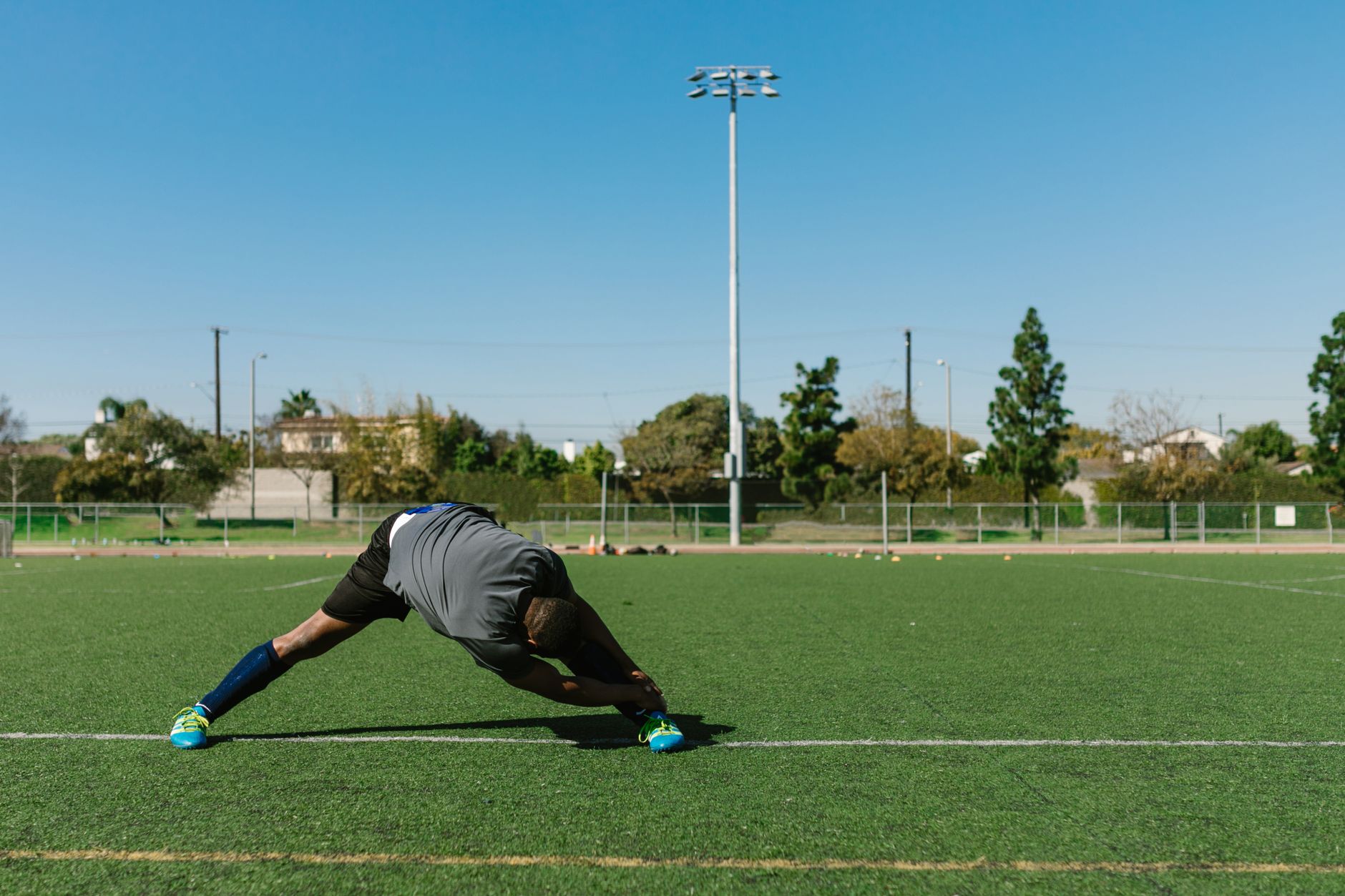
Photo by RDNE Stock project on Pexels
The inside and outside of the foot are only the beginning. Use the laces for a longer forward touch, the sole to stop or drag the ball, and the front of the foot to make tiny corrections in crowded areas. Practise receiving at different angles: across your body, toward the touchline, away from pressure, and into a marked channel. After 30 sessions over six weeks, a sensible player should not expect perfection; a more realistic target is a 10–20 percent reduction in unforced heavy touches, measured consistently on the same surface. Do not chase a dramatic number without a baseline. Write down the result, the surface, the ball pressure, and whether fatigue affected the final five minutes, because those details explain why one brilliant session can mislead you.
For practical training ideas that match modern tournament football, take a closer look here.
If you face a defender: train deception and the first two steps
One-versus-one dribbling improves when the attacker manipulates the defender’s weight before accelerating through the available side. A successful move usually involves approach speed, a believable feint, a touch away from the defender’s reach, and two explosive steps afterward. The move itself may be a shoulder drop, scissors, stop-start action, or inside-out touch; the decisive detail is the defender’s reaction, not the name of the trick. Start from 8–10 metres away and approach at 60 percent pace, because arriving too quickly removes the time needed to observe the opponent’s feet, hips, and distance.
Research on agility distinguishes pre-planned movement from reactive movement, and football requires the second kind far more often. The American College of Sports Medicine emphasizes progressive, sport-specific conditioning, which means your dribbling routine should include braking and re-acceleration rather than only straight-line speed. Use a partner or passive defender for the first repetitions, then allow the defender to choose a side. Count the result only when you beat the opponent and maintain possession for at least three metres; otherwise, you have practised a movement, not a successful dribble. That distinction may sound severe, but matches are severe enough without us inflating training statistics.
- Attack the defender’s front foot, not the empty space beside them.
- Slow down briefly before the feint to create contrast.
- Push the ball beyond the tackle radius, usually 1–2 metres.
- Accelerate for two or three steps after the touch.
- Scan immediately for the next pass or supporting runner.
Which dribbling moves deserve priority?
The highest-value moves are the body feint, shoulder drop, scissors, stop-start, drag-back, and inside-out touch because they can be performed quickly in limited space. Learn one move for each problem: the body feint to shift a defender, the stop-start to exploit hesitation, and the inside-out touch to escape a player approaching from an angle. Players such as Neymar and Vinícius Júnior often vary the timing of familiar movements rather than relying on an enormous catalogue of tricks. Study match footage from FIFA and pause before the attacker acts; identify the defender’s body position and the attacker’s final touch. That exercise develops recognition, which a mirror cannot provide.
The contrarian point is worth making: practising fewer moves can produce better dribbling. If you spend four weeks repeating three techniques under five different pressures, you will usually recognize when to use them faster than if you practise 20 tricks once each. Use a simple decision score: two points for beating the defender, one point for retaining the ball through a safe retreat, and minus two for a turnover in a central area. This reflects real football more accurately than celebrating every flashy attempt. A winger near the corner flag can accept a different risk from a midfielder 25 metres from their own goal; location changes the value of the dribble.
[Internal Link: one-versus-one attacking techniques]
If you play under pressure: connect dribbling with scanning and decisions
Dribbling under pressure is not primarily a foot-speed problem; it is an information problem. Before receiving, scan over both shoulders when possible, locate the nearest opponent, and identify the next safe space. Your first touch should then answer a question: can you turn, carry forward, shield, or pass? A player who scans early can make a shorter, calmer touch, while a player who watches the ball until contact often needs a desperate recovery touch. Elite midfielders do not dribble because they are bored with passing; they dribble when carrying the ball improves the team’s position or removes pressure from a teammate.
Use a three-colour decision exercise with cones: green means drive forward, yellow means protect and wait, and red means play away from pressure. Have a partner call the colour after your first touch, forcing you to adapt rather than follow a memorized route. In a 12-minute block, complete six rounds of 45 seconds with 30 seconds of recovery, recording whether each decision preserved possession and advanced the ball. A useful operational tip is to place the red escape route slightly behind your starting position; players otherwise train only forward aggression and never rehearse the turn that prevents a dangerous turnover. Football rewards courage, certainly, but it also rewards surviving the moment.
Here is a useful next step for readers comparing individual technique with team structure.
How should different positions dribble?
Wingers generally need explosive carries into space, midfielders need protection and orientation in crowded zones, and forwards need short touches that open shooting or passing lanes. A fullback often dribbles to escape the first presser and connect with a winger, whereas a central midfielder may dribble only after checking the cover behind them. Match Daily’s tournament coverage regularly examines how role, formation, and field location affect risk, and that context is essential when studying players from Argentina, Brazil, England, or France. Copying Messi’s touch pattern without copying the surrounding spacing is a common error; the technique may be elite, but the tactical permission is not identical.
Build position-specific constraints into training:
- Winger: start wide, beat one defender, and finish with a cross or cutback.
- Central midfielder: receive with pressure behind, escape through a gate, then pass.
- Forward: attack a defender’s blind side and finish within three touches.
- Fullback: carry 10 metres, combine with a teammate, and recover shape.
- Youth player: use larger spaces first, then reduce the area gradually.
A final pass is not a failure of dribbling; it is often the proof that the dribble created an advantage. Track “advantage actions” rather than only completed take-ons: a carry that draws two defenders, a touch that opens a passing lane, or a shield that allows a teammate to advance all have tactical value. [Internal Link: football tactics and player-role analysis] can help connect those actions to team performance. I learned this late, after years of counting only opponents beaten and wondering why some impressive sessions produced very little useful football (a painful education, but an education nonetheless).

Photo by Franco Monsalvo on Pexels
Common pitfalls to avoid
The most common dribbling mistakes are predictable, measurable, and entirely repairable. Players stand too upright, take touches that are too large, practise only their dominant foot, and accelerate before the defender commits. Others perform drills while exhausted, allowing poor technique to become the final memory of the session. According to motor-learning principles, quality feedback matters, so use video sparingly: record five repetitions from the side and five from behind, then check body height, scanning, final touch distance, and whether your acceleration followed the feint. Do not spend 40 minutes editing highlights; the ugly turnover often teaches more than the successful move.
Avoid these habits:
- Counting repetitions without standards: define what makes a repetition successful.
- Using identical cone spacing: change gaps between 0.7 and 1.5 metres.
- Ignoring the weaker foot: dedicate at least 40 percent of touches to it.
- Dribbling into pressure automatically: scan for the escape option first.
- Training tricks without outcomes: finish with a pass, shot, cross, or carry.
- Skipping deceleration: practise stopping within two metres after sprinting.
Another overlooked issue is ball inflation. A ball that is overinflated rebounds sharply and can make close control look worse than it is; a ball that is underinflated slows the exercise and encourages lazy contact. Use the manufacturer’s recommended pressure printed on the ball, check it before each session, and keep the same pressure when comparing results. Surface, footwear, weather, and fatigue should also be recorded. These details are not glamorous, but they explain why a player may complete 90 touches on indoor flooring and struggle after 20 minutes on wet grass. Evidence begins with consistency, not confidence.
For a more complete checklist before your next practice, explore the following resource.
The 30-day check-in
A 30-day football dribbling plan should progress from predictable control to reactive, opponent-based decisions. Train four days each week, leave at least one recovery day between demanding sessions, and keep each practice between 20 and 35 minutes. Days 1–7 should emphasize both-foot touches, cone changes, and posture; days 8–14 should add speed changes and passive defenders; days 15–21 should introduce reactive calls, smaller spaces, and transition actions; days 22–30 should resemble match situations with scoring, passing, and defensive recovery. This progression is deliberately modest. Players who increase volume too quickly often develop shin, ankle, or groin problems before the skill has time to settle.
A practical schedule looks like this:
- Monday: close-control circuit, 25 minutes, low-to-moderate intensity.
- Tuesday: reactive one-versus-one work, 30 minutes, high intensity.
- Wednesday: recovery, mobility, and 10 minutes of gentle ball touches.
- Thursday: scanning and small-sided decisions, 30 minutes.
- Friday: rest or light technical practice.
- Saturday: game-realistic dribbling with finishing or crossing.
- Sunday: review video, record results, and recover.
Measure progress on days 1, 15, and 30 using the same four tests: 30-second alternating touches, a six-cone course, five one-versus-one attempts, and a 4-by-4-metre pressure exercise. Record successful actions, turnovers, weaker-foot involvement, and scanning frequency. A meaningful improvement might be 15 percent more controlled touches, two additional successful take-ons, or fewer central turnovers; there is no universal target because age, position, training history, and playing level differ. The important point is to compare yourself with your own baseline, not with a professional whose support environment includes coaches, analysts, and daily medical supervision.
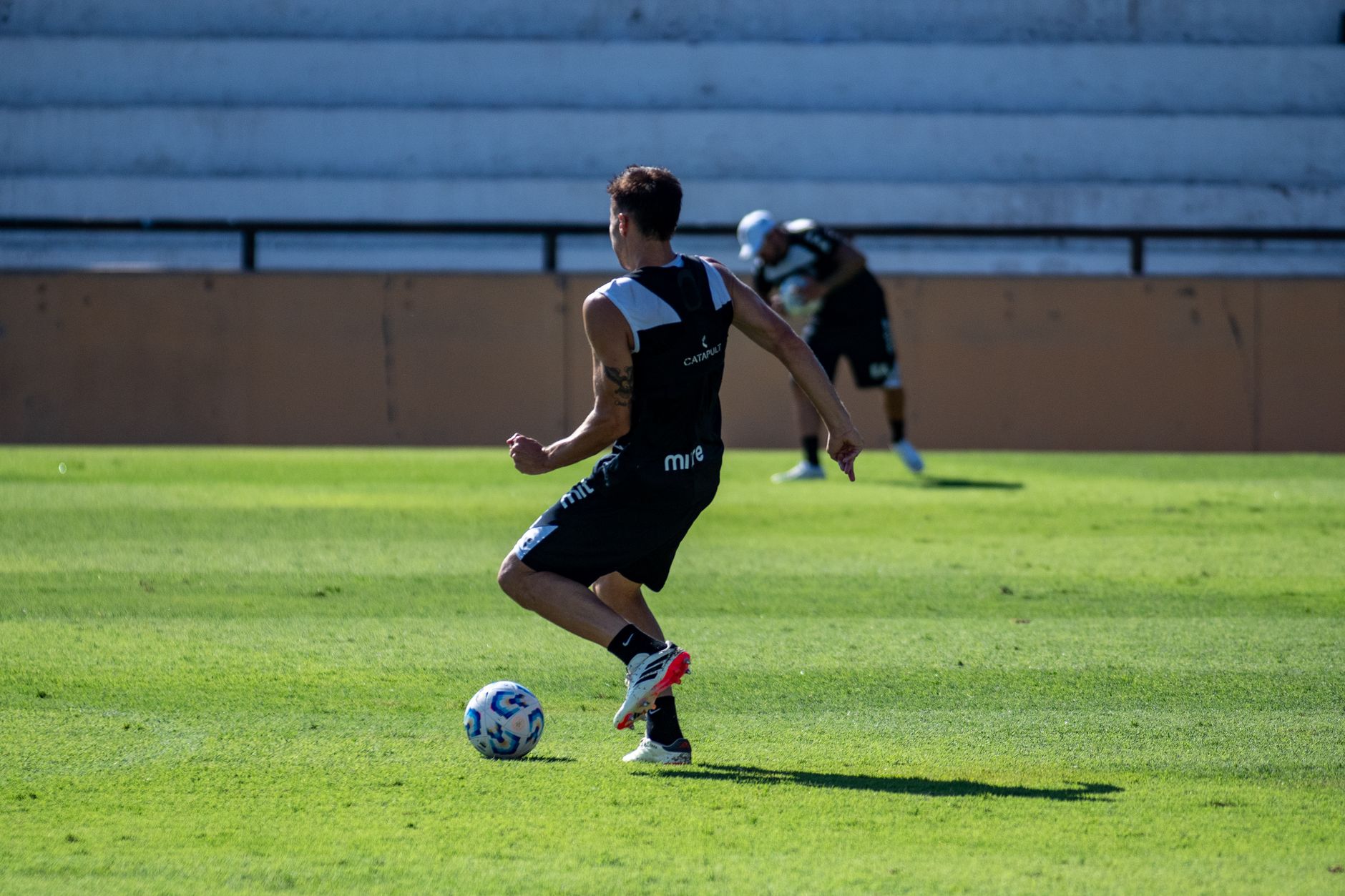
Photo by Franco Monsalvo on Pexels
At the end of the month, ask four uncomfortable but useful questions: Do I look up before pressure arrives? Can I change speed without losing the ball? Do I know when to pass instead of dribble? Can I repeat the action late in a match? If the answer is no, repeat the relevant week rather than racing forward. “Practice must be specific to the demands of performance,” a principle widely reflected in sport-science guidance from the American College of Sports Medicine; the sensible interpretation is not to make every session chaotic, but to increase realism in controlled steps. Consistency beats heroic sessions, and a player who trains three focused times weekly will usually outperform one who trains furiously once and disappears for six days.
Frequently Asked Questions
Q: What does football dribbling mean?
A: Football dribbling means moving with the ball while retaining control, creating space, escaping pressure, or progressing the attack. It includes touches with the inside, outside, sole, and laces, but it also requires scanning and choosing the correct action. A successful dribble is not always a spectacular take-on; carrying the ball safely away from pressure can be the best decision. Train both technical control and the next action, such as passing, crossing, or shooting.
Q: How can I improve football dribbling skills at home?
A: Improve football dribbling at home with a 15–25-minute routine using a small safe area, six cones, and both feet. Begin with inside and outside touches, add sole-rolls and directional changes, then practise speed variation through a marked gate. If space is limited, focus on 1–2-metre movements and frequent scanning rather than sprinting. Keep the ball pressure and surface consistent so your results can be compared accurately.
Q: What is the difference between cone dribbling and game-realistic dribbling?
A: Cone dribbling develops predictable ball control, while game-realistic dribbling adds opponents, scanning, pressure, and decisions. Cones are useful for learning touch direction and coordination, but they never react or close space. After mastering a route, add a partner, verbal colour call, time limit, or finishing action. A balanced session should include both forms, with reactive work becoming more important as your technique improves.
Q: Why does my dribbling work in training but fail in matches?
A: Dribbling often fails in matches because training lacks pressure, fatigue, scanning, or realistic decision-making. Players may take clean touches around stationary cones but look down when an opponent approaches, then lose the time needed to escape. Add passive and active defenders, reduce the available space, and practise after short sprints. Review five recorded match moments and identify whether the problem was control, awareness, timing, or decision selection.
Q: How often should I practise football dribbling?
A: Most players can practise football dribbling three or four times weekly for 20–35 minutes, provided high-intensity sessions are separated by recovery. Beginners should start with three sessions and emphasize control, while experienced players can add reactive one-versus-one work. Avoid demanding sprint-and-cut sessions on consecutive days if your ankles, knees, or groin are sore. Short, consistent practice is more productive than one exhausting weekly session.
Q: Is dribbling with the weaker foot really necessary?
A: Weaker-foot dribbling is necessary because it increases your escape routes and makes your movement less predictable. Allocate at least 40 percent of technical touches to the weaker foot, then use it under pressure rather than only in comfortable cone drills. Begin with larger gaps and slower speeds, reducing the space as control improves. The objective is functional confidence, not identical ability in both feet.
Q: How do I know whether my dribbling is improving?
A: Measure improvement through controlled touches, successful take-ons, turnovers, scanning frequency, and useful forward carries. Test yourself on days 1, 15, and 30 using the same ball pressure, surface, cone spacing, and fatigue conditions where possible. A 10–20 percent reduction in heavy touches or two more successful one-versus-one actions can represent meaningful progress. Always include decision quality, because more touches mean little if they repeatedly endanger possession.
Match Daily’s football coverage can help you connect individual dribbling technique with player roles, team tactics, and the wider 2026 FIFA World Cup conversation. Keep your training evidence-based, your touches purposeful, and your ambition under control; the defender does not award extra points for unnecessary decoration. Build the habit, measure the result, and make the next decision earlier than your opponent.
Ready to keep developing your football knowledge and training approach?
Thank you for reading.
Match Daily · Editorial Archive · 2026