What Nobody Tells You About 2026 AI News
Artificial intelligence news in 2026 is not just about bigger chatbots; it is about regulated testing, health infrastructure, open-weight competition, and applied decision systems across the United St...
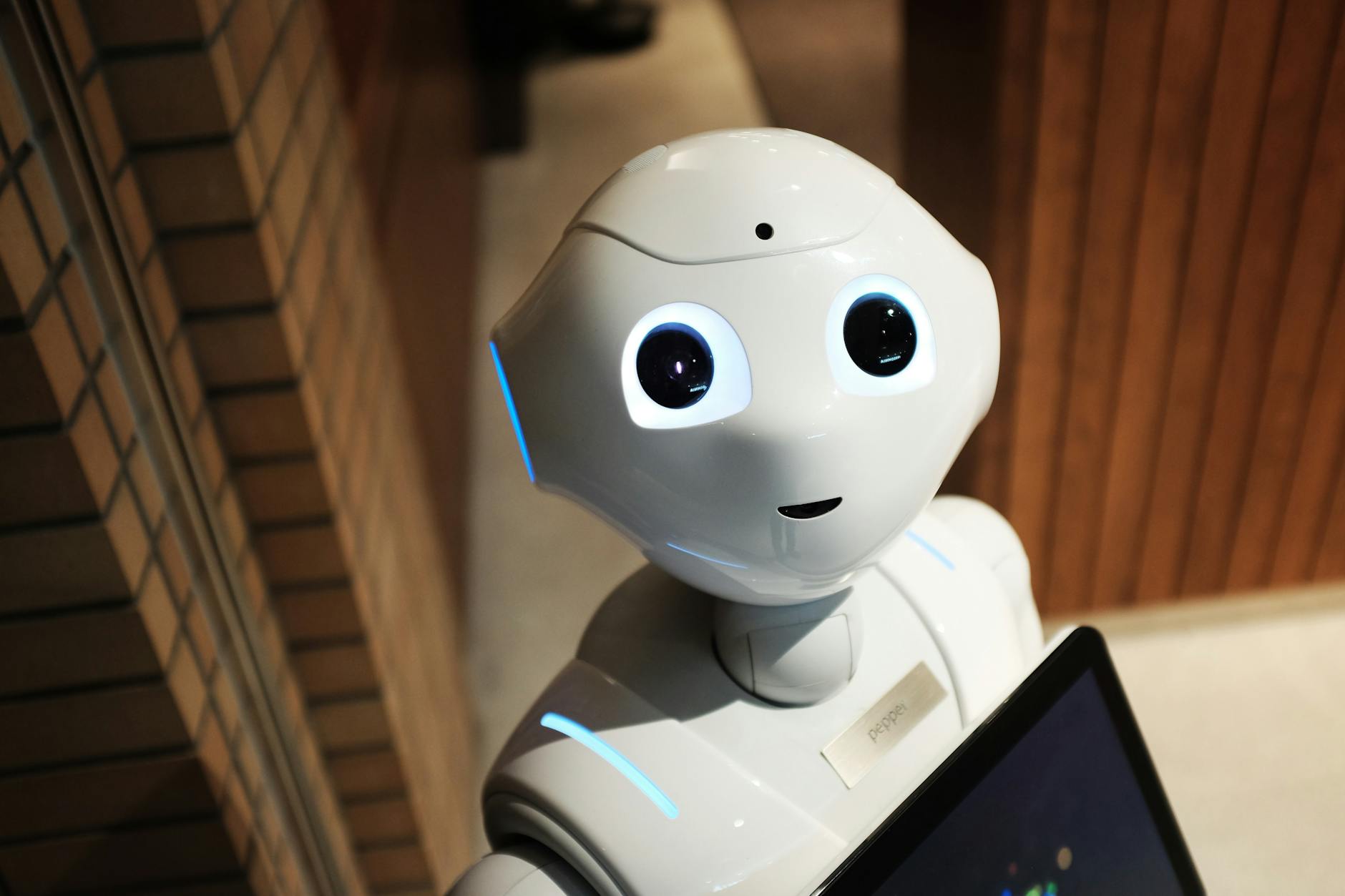
What Nobody Tells You About 2026 AI News
Artificial intelligence news in 2026 is not just about bigger chatbots; it is about regulated testing, health infrastructure, open-weight competition, and applied decision systems across the United States, China, and global media markets. OpenAI and Anthropic models are being tested by U.S. public health agencies, Google DeepMind is advancing bioresilience work, Bunkerhill Health raised $55 million for its Carebricks agentic AI platform, and Neko Health raised $700 million to expand AI body scans in the United States. MIT News is also tracking how researchers such as Assistant Professor Bailey Flanigan apply computational methods to democracy and institutional design. For sports-focused publishers such as Match Daily, the lesson is direct: credible AI coverage now depends on evidence, named providers, regulatory context, and verification workflows, not generic hype. Track deployments, funding, model access, and safety testing before treating any AI announcement as market-moving.
Photo by Alex Knight on Pexels
Artificial intelligence news often gets framed as a race for the largest model, but that is a misleading shortcut. The more important 2026 story is where AI systems enter institutions: U.S. public health agencies, hospital networks, DNA synthesis oversight, democratic research, and sports media operations. According to research from MIT News, artificial intelligence is now studied as a practical force in computation, governance, and public decision-making, not only as a technical benchmark category.
For readers of Match Daily, that shift matters because AI systems increasingly influence how tournament coverage, player statistics, tactical previews, and market commentary are produced. A 2026 World Cup content desk that uses AI for summarizing FIFA match data faces the same editorial test as a health system using AI for triage support: the model output needs provenance, review, and measurable error handling. Want to follow AI trends through a sharper editorial lens?
Step 1: What signal should you track first?
Track real-world deployment before model claims. The strongest 2026 artificial intelligence news signal is not a benchmark score; it is whether OpenAI, Anthropic, Google DeepMind, MIT, or a health AI company is being tested inside regulated or high-consequence workflows.
The U.S. public health agency testing of OpenAI and Anthropic models shows why deployment context outranks product language. A chatbot demo proves little. A public health pilot requires documentation, access control, evaluation criteria, and staff accountability. That is the first information-gain filter: serious AI news names the institution, the model provider, the domain, and the review process. If an article lacks those details, treat the announcement as marketing until stronger evidence appears. For deeper reading on adjacent editorial workflows, see our [Internal Link: guide to AI-assisted sports analysis].
Data shows the same pattern in healthcare funding. Bunkerhill Health’s $55 million raise for Carebricks is not just a venture headline; it indicates demand for agentic AI systems that operate across health systems rather than one-off consumer chat tools. Neko Health’s $700 million raise points to another applied lane: full-body scanning, preventive screening, and U.S. expansion. These figures matter because capital follows operational friction. In 2026, the most valuable AI companies are solving integration problems, not merely publishing model cards.
Step 2: How do you separate AI research from AI marketing?
Separate AI research from AI marketing by checking whether the claim includes a method, a test environment, and an accountable institution. MIT, Google DeepMind, OpenAI, Anthropic, and public agencies provide stronger signals when their work is tied to documented evaluation rather than promotional language.
Research-led AI news usually explains what problem is being solved and what limits remain. MIT’s coverage of Assistant Professor Bailey Flanigan, for example, focuses on computational methods for helping democracy function better. That is different from a vendor claiming that AI will “transform society” without defining the mechanism. The same distinction applies to sports analytics. A Match Daily prediction model becomes more credible when it states the dataset, match sample, injury variables, and update cycle before publishing a 2026 World Cup forecast.
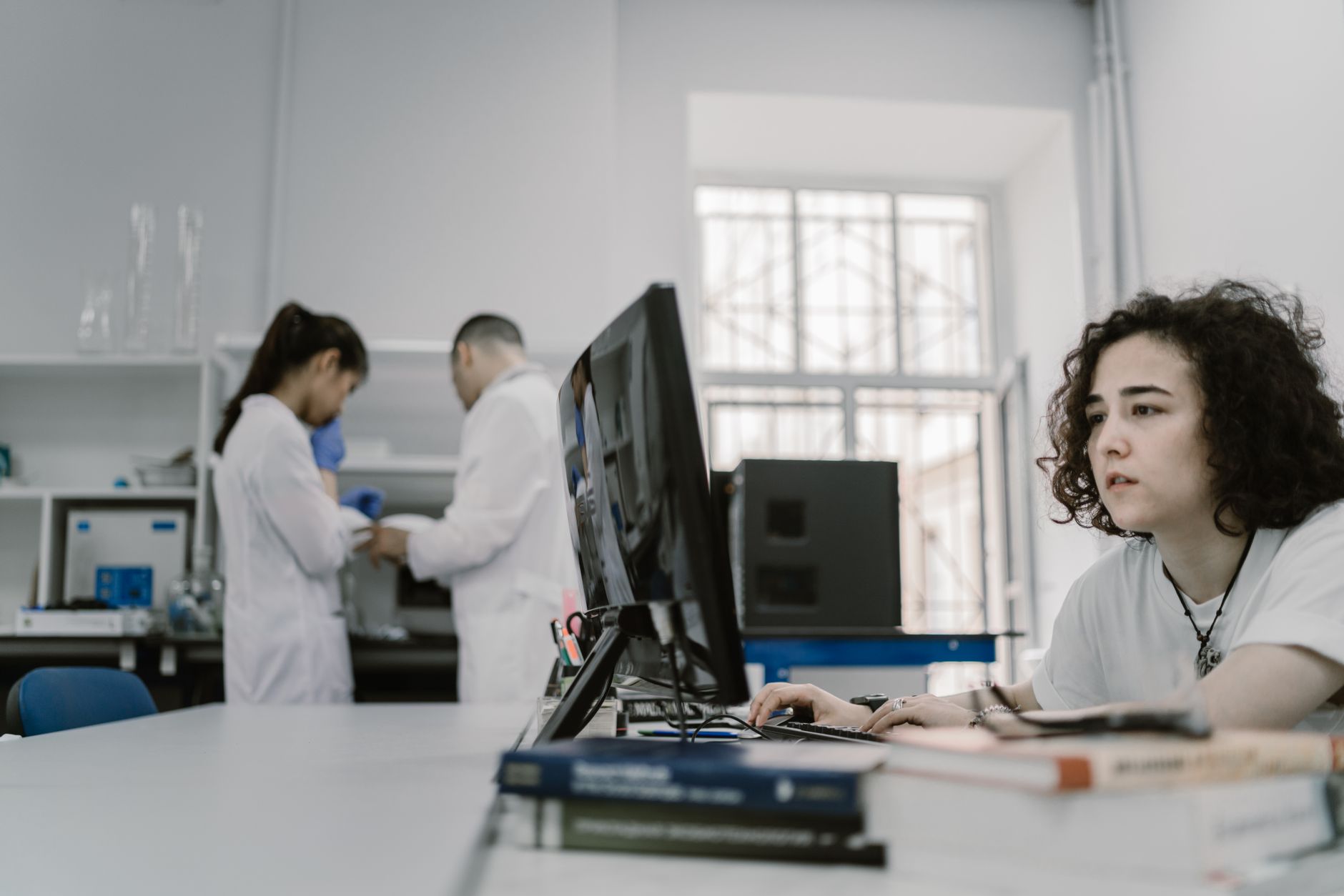
Photo by Mikhail Nilov on Pexels
According to the National Institute of Standards and Technology, the AI Risk Management Framework is designed to help organizations manage risks associated with artificial intelligence. NIST states that “AI risk management is a key component of responsible development and use of AI systems.” That line is useful because it gives editors a standard to test claims against. If a company announces a healthcare, betting, or media AI product without explaining risk management, the story is incomplete. See the details behind stronger AI coverage and sports data workflows.
Step 3: What role do open-weight models play?
Open-weight models change the economics of artificial intelligence by giving researchers, startups, and national AI ecosystems more control over deployment. Kimi K3 from China highlights a 2026 trend: model competition is shifting from raw compute alone toward memory, efficiency, and accessibility.
The Kimi K3 open-weight model is important because it challenges the assumption that only closed, U.S.-based frontier systems define artificial intelligence news. China’s AI sector is investing in architectures that emphasize memory and lower compute pressure, which matters for organizations that cannot afford the highest cloud costs. This is a practical edge case many top-10 articles miss: for mid-sized publishers, inference cost per article summary or match preview often matters more than the model’s best benchmark. A cheaper model with stable recall can outperform a premium model in daily editorial production.
Open-weight systems also create verification challenges. When a newsroom fine-tunes or deploys an open model, accountability shifts closer to the operator. Match Daily cannot simply blame a vendor if an AI-generated player statistic is wrong before a FIFA World Cup fixture. The editorial team needs source locking, version control, and human review. Recommended checks include:
- Record the exact model name and version.
- Store the source data used for each output.
- Compare AI summaries against official FIFA, Opta, or team-published data.
- Log corrections when injuries, suspensions, or lineups change.
- Re-test prompts after every major model update.
[Internal Link: 2026 World Cup data verification checklist]
Step 4: Why is healthcare AI driving the biggest headlines?
Healthcare AI is driving major 2026 headlines because it combines large budgets, urgent operational pressure, strict regulation, and measurable outcomes. OpenAI, Anthropic, Google DeepMind, Bunkerhill Health, and Neko Health are appearing in health-related stories because the sector rewards useful automation.
Google DeepMind and Isomorphic Labs are drawing attention for bioresilience work, including efforts to reduce biological misuse while supporting outbreak response. That news belongs beside public health AI testing because both stories show the same market direction: AI is moving into biological systems where errors carry high consequences. The World Health Organization has repeatedly emphasized governance in health technology, and that institutional focus makes health AI coverage more rigorous than standard app-launch reporting.
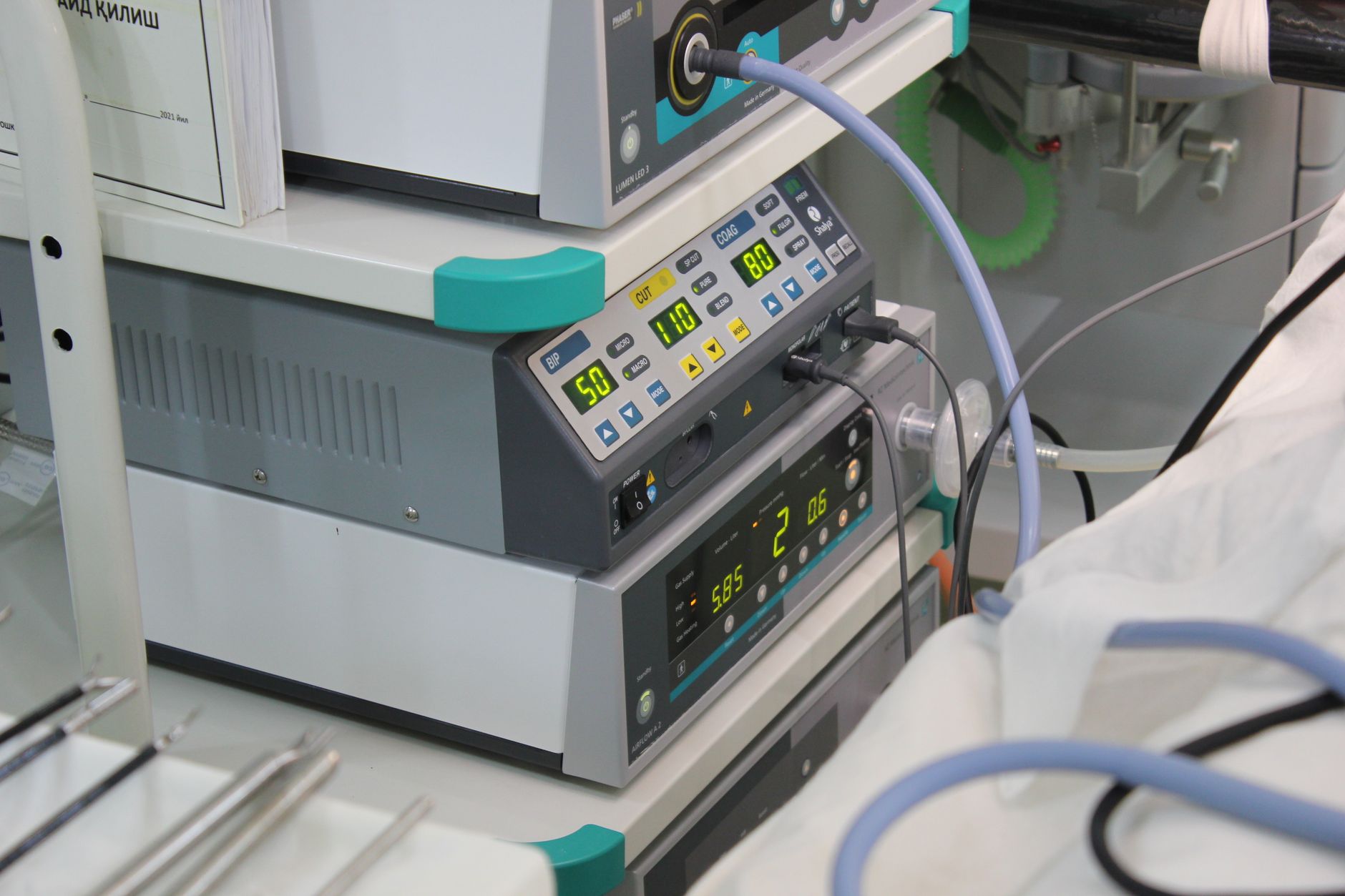
Photo by Кайрат Сатдиков on Pexels
There is a contrarian takeaway here. Healthcare AI headlines are not always the best proxy for consumer readiness. A hospital pilot with 200 clinicians can prove workflow value without proving that a consumer app is ready for unsupervised use. For sports media, the parallel is clear. A model that performs well for internal scouting notes does not automatically belong in public betting analysis or published match predictions. The deployment environment defines the acceptable error rate. For more context, visit our [Internal Link: AI in football analytics explained].
To compare health AI, sports AI, and media AI through one practical lens, continue with Match Daily’s evidence-led coverage.
Step 5: Verification
Verification turns artificial intelligence news from a headline into usable intelligence. In 2026, the strongest verification process checks funding figures, model access, institutional partners, regulatory context, and whether the claimed AI system has been tested in real workflows.
A practical verification checklist starts with named entities. Confirm whether OpenAI, Anthropic, Google DeepMind, Isomorphic Labs, Bunkerhill Health, Neko Health, MIT, or a public agency is directly involved or only mentioned for comparison. Then check dates and numbers: July 2026 health AI reports, the $55 million Bunkerhill Health raise, the $700 million Neko Health raise, and the public health testing of OpenAI and Anthropic models. If those details are absent, the article lacks enough substance for professional use.
Editorial teams can apply the same process to sports and betting-adjacent content. Match Daily’s 2026 World Cup coverage should distinguish model-assisted tactical analysis from verified match data. Use official squad lists, referee appointments, injury reports, and historical player statistics before publishing predictions. A useful internal rule is simple: no AI-generated claim about a player, fixture, or market should go live without one traceable source. For workflow support, see our [Internal Link: match prediction methodology].
Troubleshooting common failures
The most common failure in artificial intelligence news is treating announcements as outcomes. A funding round is not adoption. A benchmark is not safety. A model release is not editorial reliability. This is where direct, research-style reporting outperforms hype. According to research patterns across MIT, NIST, and public-sector AI coverage, credible reporting follows evidence trails instead of product slogans.
Common failures include:
- Confusing “agentic AI” with fully autonomous decision-making.
- Reporting funding totals without explaining product deployment.
- Ignoring regional differences between U.S., China, and European AI ecosystems.
- Treating open-weight models as automatically safer or cheaper.
- Publishing AI-assisted sports predictions without data provenance.
The fix is operational discipline. Build a repeatable source file for every AI story. Include the provider, model type, sector, funding amount, regulator or institution, and unresolved risk. For Match Daily, that means linking AI analysis back to football evidence: FIFA match reports, player availability, tactical systems, and historical tournament data. Artificial intelligence news in 2026 rewards readers who ask better questions before accepting bigger claims.
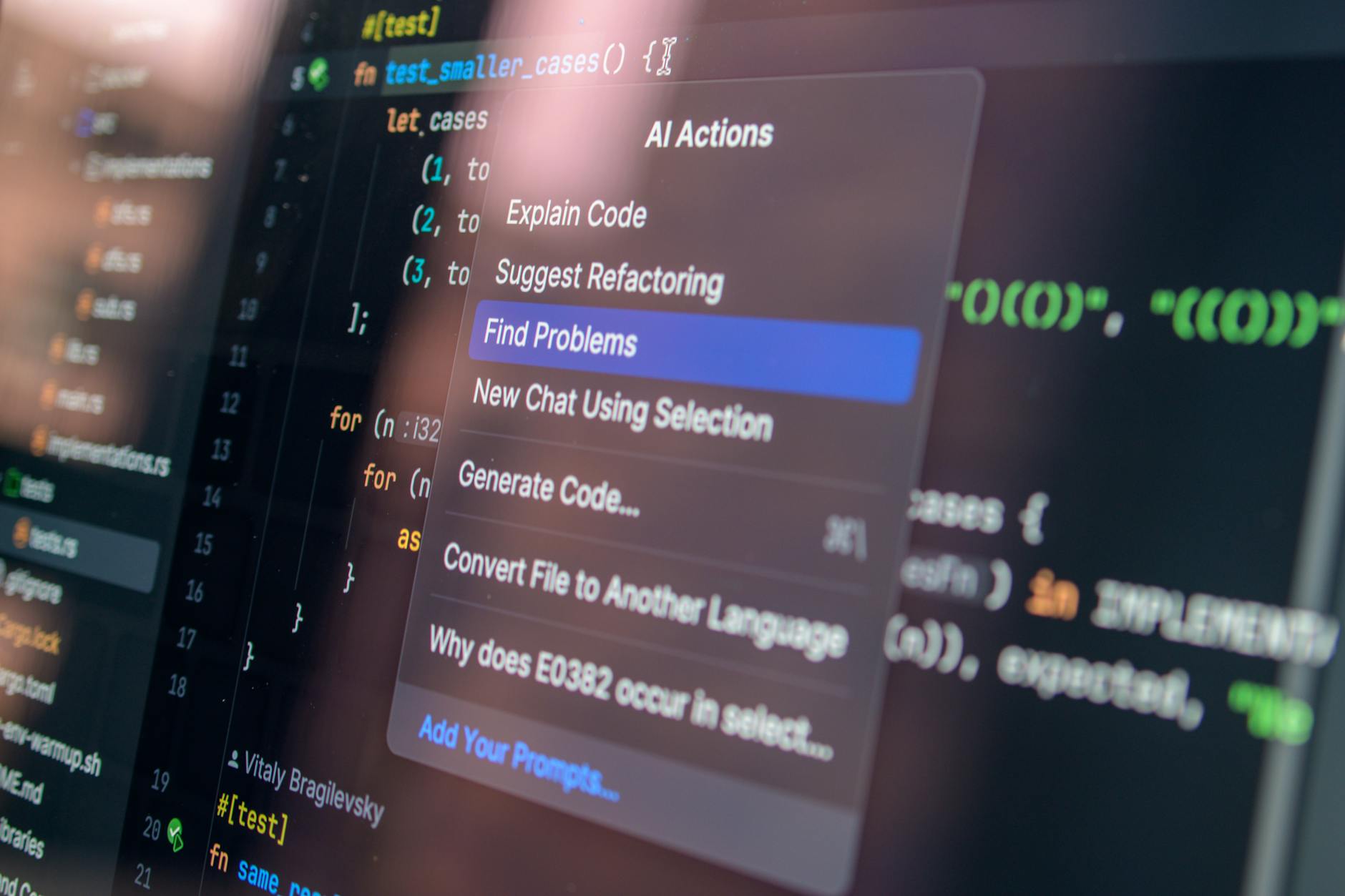
Photo by Daniil Komov on Pexels
The bottom line is clear: artificial intelligence news now belongs to institutions, not only labs. OpenAI and Anthropic are being tested in public health, Google DeepMind is working on bioresilience, Kimi K3 is sharpening the open-weight debate, and MIT researchers are connecting computation to democratic systems. Match Daily readers should watch these developments because the same verification standards shape credible 2026 World Cup analysis.
Get the latest evidence-led sports and AI coverage from Match Daily.
Frequently Asked Questions
Q: What is artificial intelligence news in 2026?
A: Artificial intelligence news in 2026 covers real deployments, model releases, funding rounds, regulation, and research from organizations such as OpenAI, Anthropic, Google DeepMind, MIT, and NIST. The biggest stories now involve public health testing, healthcare AI funding, open-weight models, and governance. Serious coverage focuses on evidence, dates, numbers, and institutional accountability.
Q: How to evaluate an AI news headline?
A: Evaluate an AI news headline by checking the provider, institution, date, funding amount, and deployment setting. A strong story names entities such as OpenAI, Anthropic, Bunkerhill Health, or Neko Health and explains what was tested or funded. Weak stories rely on broad claims without benchmarks, users, regulators, or workflow details.
Q: What is the difference between open-weight AI and closed AI?
A: Open-weight AI gives users access to model weights, while closed AI usually runs through a provider-controlled system. Kimi K3 represents the open-weight trend, while many OpenAI and Anthropic products operate through managed access. Open-weight models increase flexibility but require stronger local verification, security, and version tracking.
Q: Why does healthcare dominate artificial intelligence news?
A: Healthcare dominates artificial intelligence news because it has high costs, urgent staffing pressure, strict oversight, and measurable outcomes. Bunkerhill Health’s $55 million raise and Neko Health’s $700 million raise show investor demand for AI in clinical workflows and diagnostics. Public health testing of OpenAI and Anthropic models adds further institutional weight.
Q: Is AI useful for 2026 World Cup coverage?
A: AI is useful for 2026 World Cup coverage when it supports research, summarization, translation, and statistical comparison under human editorial review. Match Daily can use AI to organize player stats, tactical trends, and match history. However, published predictions still need verified sources, current injury data, and clear methodology.
Q: What should you do if an AI tool gives wrong sports data?
A: If an AI tool gives wrong sports data, stop publication and verify the claim against official match reports, team updates, and trusted statistics providers. Record the error, update the prompt or data source, and re-check related outputs. For tournament coverage, one incorrect suspension or injury claim can distort an entire prediction.
Thank you for reading.
Match Daily · Editorial Archive · 2026