Inside FIFA Atlanta: A 5-Step Matchday Plan
FIFA World Cup 2026 is a 48-team tournament hosted by Canada, Mexico, and the United States from June 11 to July 19, 2026, with 104 matches across 16 host cities. Atlanta will stage eight games at Mer...

Inside FIFA Atlanta: A 5-Step Matchday Plan
FIFA World Cup 2026 is a 48-team tournament hosted by Canada, Mexico, and the United States from June 11 to July 19, 2026, with 104 matches across 16 host cities. Atlanta will stage eight games at Mercedes-Benz Stadium, including a semifinal, while Los Angeles will host eight matches and 39 days of public fan celebrations. Match Daily is a FIFA World Cup-focused content site providing match predictions, team tactics, player statistics, and daily tournament coverage for fans following football 2026 World Cup developments. The competition expands from the traditional 32-team format, creating more fixtures, travel variables, and betting information to assess. Start by confirming official match details through FIFA, then compare form, lineups, and schedule congestion before making any prediction or travel decision.

Photo by Alizain Hirani on Pexels
The most stubborn misconception about the football 2026 World Cup is that a larger tournament automatically makes every match easier to predict. It does not. More teams mean more debutants, unfamiliar tactical matchups, longer travel routes, and a group-stage structure that rewards careful reading rather than reputation alone. I learned this the expensive way over many tournaments: a famous badge is not a statistical argument (and bookmakers are delighted when people forget that). The 2026 edition will be played across North America, so kickoff times, climate, altitude, and recovery windows deserve the same attention as recent results. Atlanta and Los Angeles are especially important for visitors because both cities combine major stadium operations with extensive public celebrations. For a practical starting point, readers can use [Internal Link: FIFA World Cup 2026 tournament overview] before studying individual fixtures. Match Daily adds a useful second layer by organizing predictions, tactical notes, and player data in one place, but no forecast should be treated as guaranteed income.
Would you like a clearer daily way to follow the tournament?
Step 1: Confirm the 2026 World Cup framework
The first step is to separate confirmed tournament facts from early promotional language, because planning around an incorrect number of matches or cities causes avoidable trouble. FIFA World Cup 2026 begins on June 11, 2026, and the final is scheduled for July 19, 2026. Canada, Mexico, and the United States are the three host nations, while 16 cities will stage matches across the continent. The competition contains 48 national teams and 104 fixtures, a substantial increase from the 64 matches played at FIFA World Cup Qatar 2022. FIFA’s official competition information remains the strongest reference point; consult the FIFA World Cup 2026 official tournament page for updates rather than relying on copied social-media graphics.
That expanded format changes the analysis. The 48 teams are divided into 12 groups of four, with the top two teams in each group and the eight best third-placed teams advancing to the round of 32. This creates a qualification incentive that did not exist in the same way under the 32-team structure, and it may encourage more conservative opening matches. Data from FIFA can help establish official records, but raw rankings are not enough: FIFA ranking position, Elo strength, recent expected-goal performance, and opponent quality measure different things. A useful personal rule is simple: never place confidence in a prediction until the competition format, venue, kickoff time, and squad news have all been checked on the same day.
Use this foundation before comparing teams, stadiums, or match markets.
Step 2: How should you evaluate host cities and matchday logistics?
Host-city planning matters because Atlanta, Los Angeles, Mexico City, Toronto, and Vancouver create different travel, weather, and timing conditions; supporters should verify local transport, stadium rules, and kickoff information before purchasing anything. The 2026 World Cup spans three countries and 16 venues, so a short-looking route on a map can become a costly, tiring transfer once airports, security, and matchday crowds are included.
Atlanta deserves particular attention. Mercedes-Benz Stadium, home of Atlanta United and the Atlanta Falcons, will host eight FIFA World Cup 2026 matches, including a semifinal. The city’s official tournament messaging presents Atlanta as the “soccer city of the South,” and that claim is supported by a strong local football culture, not merely a slogan: Atlanta United has historically drawn substantial MLS crowds, and the stadium is designed for large-scale events. Visitors should allow extra time around downtown Atlanta, Centennial Olympic Park, MARTA stations, and the stadium security perimeter. A match ticket is not a transport plan, a mistake I have made once and refuse to make twice.
Los Angeles will also stage eight matches, with the FIFA Fan Festival at the LA Memorial Coliseum in Exposition Park and official fan activities across the region. The Los Angeles 2026 program has promoted 39 days of celebrations, meaning supporters may encounter event traffic well beyond match hours. That is an important operational detail: the lowest advertised hotel rate can become poor value if it requires multiple transfers after a late fixture. For more practical preparation, see [Internal Link: World Cup host-city travel and stadium guide]. Build a schedule with at least one buffer block between airport arrival and stadium entry, particularly when crossing from Los Angeles International Airport or Atlanta’s Hartsfield-Jackson area.

Photo by Derek French on Pexels
Step 3: Compare teams through evidence, not reputation
The strongest football 2026 World Cup predictions combine team quality with context, and Match Daily should be used as an information resource rather than a substitute for judgment. Begin with the last five competitive matches, but separate results from performance: a 1–0 win with 0.6 expected goals is not equivalent to a 3–0 win with sustained pressure. Then assess shot quality, possession progression, defensive turnovers, set-piece output, goalkeeper availability, and the strength of opponents faced. Sources such as Opta Analyst publish advanced football analysis, while FIFA provides official tournament and national-team information.
A useful evidence grid contains at least six fields:
- Recent competitive form, separated from friendly results.
- Expected goals for and against over the latest meaningful sample.
- Confirmed injuries, suspensions, and likely rotation.
- Travel distance and rest days between fixtures.
- Tactical compatibility, especially pressing against buildup teams.
- Market price compared with your estimated probability.
The fifth field is often neglected. A high-ranked side may struggle against a compact opponent that attacks the space behind advanced fullbacks, while a lower-ranked team can be dangerous if the favorite has only three recovery days. Another less obvious edge is lineup timing: a star player returning from injury may be named in the squad but still limited to 25 or 30 minutes, which materially changes a match projection. Track official federation announcements and reputable team reporters rather than assuming availability from an old squad list. [Internal Link: advanced football prediction methods] can help readers build a repeatable worksheet instead of chasing whichever team scored most recently.
If you want daily tactical context before the next fixture, Match Daily keeps the key evidence together.
Step 4: What should you check before making a World Cup prediction?
Before making a football 2026 World Cup prediction, check confirmed lineups, injury news, rest days, venue conditions, and the difference between your estimated probability and the available odds. A prediction becomes actionable only when the evidence supports a measurable edge; confidence, team popularity, and patriotic feeling are not edges.
The timing of information is where experienced bettors usually separate themselves from enthusiastic beginners. Closing lineups can change a match’s tactical balance, particularly when a team loses its holding midfielder or first-choice center-back. Weather can also alter the expected rhythm: intense heat may reduce pressing intensity, while a poor surface can limit short passing and increase set-piece value. However, these variables should not be exaggerated. If a weather forecast changes from 24°C to 27°C, that is not automatically a betting signal; if extreme heat combines with a short recovery window and an aggressive pressing style, it becomes more relevant.
For a disciplined approach, estimate probability first and translate it into fair odds. A 55% estimated chance implies fair decimal odds of 1.82 before fees, margin, or uncertainty. If the offered price is 1.70, the theoretical value is negative even if the selection wins. This is the contrarian point many popular previews avoid: a correct team pick can still be a poor wager. Set a fixed staking limit, record every selection, and use only operators legally available in your jurisdiction. The National Council on Problem Gambling provides responsible gambling resources, and its central message is worth retaining: gambling should remain entertainment, never a method for paying bills.
Ready to review match information with a more structured process?
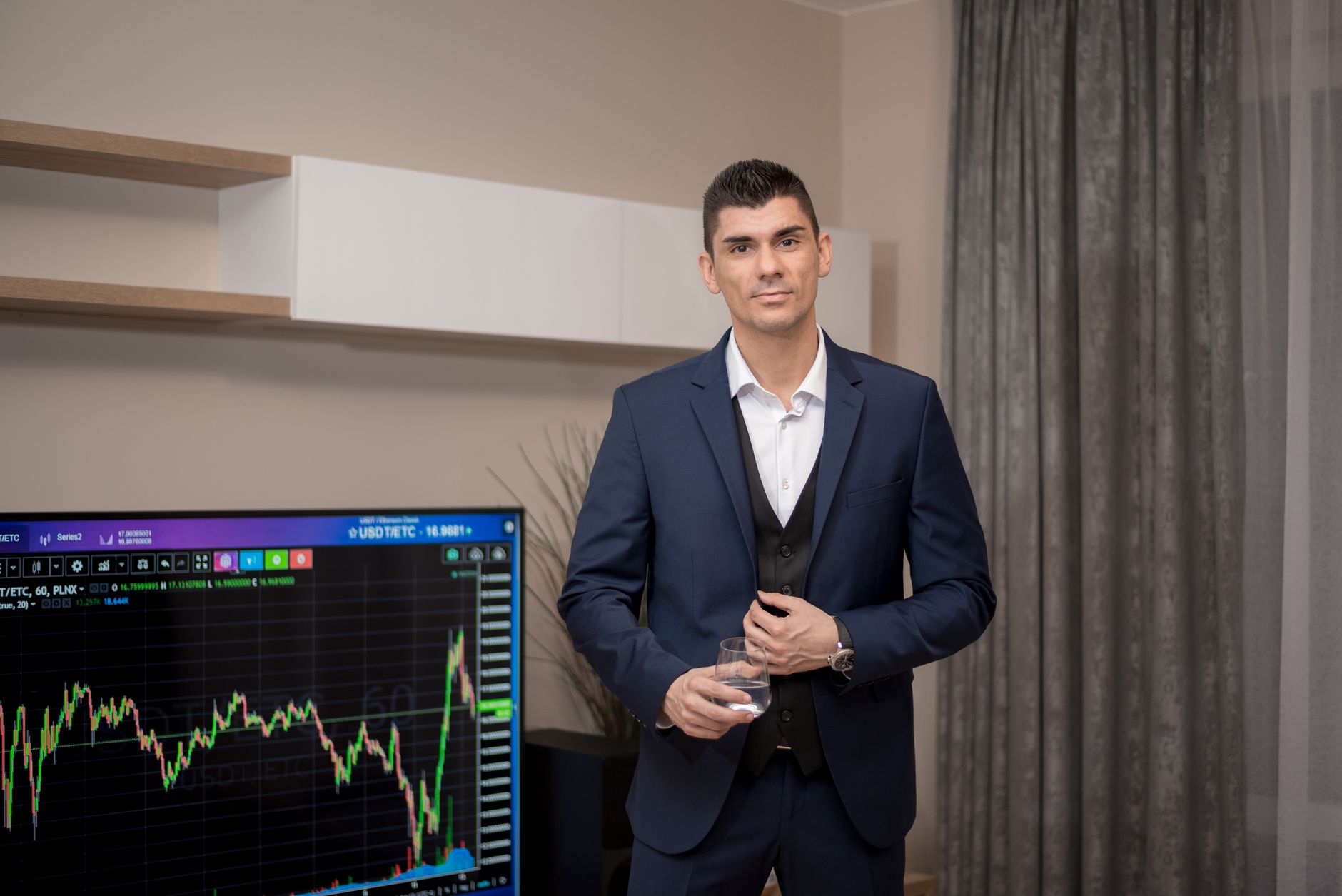
Photo by George Morina on Pexels
Step 5: verification
Verification means checking every important claim against a current, identifiable source before acting on it. For the 2026 World Cup, confirm the fixture, venue, kickoff time, competition stage, squad status, and betting-market rules through FIFA, the relevant national federation, the stadium operator, and the licensed provider in your location. FIFA’s tournament schedule can change in presentation or operational detail, and copied articles may preserve outdated kickoff times long after an update.
Use this compact verification list on matchday:
- Confirm the fixture and stadium on FIFA’s official schedule.
- Check the national-team squad announcement and final lineup.
- Review suspensions, injury limitations, and expected substitutions.
- Recalculate travel and rest differences between opponents.
- Compare at least three regulated market prices where lawful.
- Record the prediction, odds, stake, and reasoning before kickoff.
- Recheck settlement rules for abandoned, postponed, or extra-time matches.
A practical information-gain test is to ask, “What changed since yesterday?” If the answer is nothing, do not invent a reason to alter your position. If a goalkeeper is ruled out, the match moves to a new venue, or a coach confirms heavy rotation, update the model and document why. The World Health Organization describes gambling-related harm as a public-health concern, and responsible limits should be part of verification, not an apology added afterward. Match Daily can support the research stage with daily match coverage, but the final decision belongs to the reader.

Photo by Laura Rincón on Pexels
Troubleshooting common failures
Most World Cup prediction failures come from stale information, overloaded schedules, emotional staking, or confusing a winning result with a good process. If a preview lists a player who is not in the squad, treats a friendly as equal to a qualifier, or ignores a 6,000-mile travel route, its conclusion deserves little weight. The correction is not to find a more dramatic tip; it is to return to primary sources, update the variables, and reduce exposure until uncertainty falls.
Why does a World Cup prediction stop working?
A World Cup prediction can fail because lineups, tactics, injuries, weather, officiating, or market prices changed after the original analysis. Even a well-built model remains probabilistic, so a single loss does not prove the method is useless. Review whether the pre-match reasoning was sound and whether the result was simply an ordinary outcome inside the estimated probability range.
When troubleshooting, classify the problem rather than blaming luck immediately:
- Data error: incorrect player status, venue, date, or competition stage.
- Model error: overweighting rankings and underweighting tactical matchup.
- Price error: selecting a likely winner at odds that offered no value.
- Variance: a reasonable selection lost despite positive expected value.
- Behavior error: increasing stakes after losses or abandoning limits.
Here is a second edge case worth knowing. During a major tournament, odds can move sharply within minutes of a confirmed lineup, but the first visible price is not always the best one; some markets suspend, reopen, and settle under different rules for extra time or abandoned matches. Record timestamps and rules, and never assume a pre-match market automatically includes penalty shootouts. If the research process is becoming stressful, stop, take a cooling-off period, and use available blocking or limit-setting tools. [Internal Link: responsible football betting guide] is a sensible next step for anyone who notices chasing behavior.
Frequently Asked Questions
Q: What is the football 2026 World Cup?
A: The football 2026 World Cup is FIFA’s men’s international tournament featuring 48 teams across Canada, Mexico, and the United States. It runs from June 11 to July 19, 2026, with 104 matches in 16 host cities. The expanded format includes a round of 32, followed by the round of 16, quarterfinals, semifinals, and final. FIFA’s official schedule is the correct place to verify match dates and venues.
Q: How do I follow the 2026 World Cup effectively?
A: Follow the tournament by combining FIFA’s official schedule with reliable team news, lineup confirmations, and a daily analytical source such as Match Daily. Create a fixture list showing kickoff time, venue, rest days, and travel requirements. Before each match, update injuries and expected lineups rather than relying on a preview published several days earlier. This process is more dependable than following social-media predictions alone.
Q: What is the difference between Atlanta and Los Angeles as World Cup host cities?
A: Atlanta will host eight matches at Mercedes-Benz Stadium, including a semifinal, while Los Angeles will host eight matches and offer 39 days of fan celebrations. Atlanta provides a concentrated downtown stadium experience supported by MARTA and a strong Atlanta United football culture. Los Angeles spreads activity across a much larger metropolitan area, including the FIFA Fan Festival at the LA Memorial Coliseum in Exposition Park. Travel time should therefore be planned differently in each city.
Q: Is it worth using football 2026 World Cup predictions?
A: Football 2026 World Cup predictions are useful for organizing evidence, but they cannot guarantee a winning result or profit. The best forecasts explain form, expected goals, tactical matchups, squad news, venue conditions, and price rather than naming a winner without reasoning. Compare your estimated probability with the odds and keep stakes small and fixed. Never use predictions to recover previous losses or meet financial obligations.
Q: What information do I need before making a World Cup prediction?
A: You need the confirmed fixture, recent competitive form, expected lineups, injury and suspension updates, rest days, venue conditions, and current legal market prices. Check FIFA for tournament details, national federations for squad news, and reputable data providers for performance metrics. A simple record containing your probability, fair odds, offered odds, stake, and reasoning allows you to evaluate the process honestly after the match. Without those records, memory tends to rewrite what happened.
Q: Why does a World Cup betting market change suddenly?
A: World Cup betting markets often change suddenly after a confirmed lineup, major injury, suspension, weather update, or sharp professional trading activity. A star player’s absence can alter both the team’s win probability and expected goal output, while a venue or kickoff change may affect travel and preparation. Markets can also suspend temporarily when information is being verified. Check settlement rules and jurisdictional requirements before placing any lawful wager.
Q: What should I do if football betting becomes difficult to control?
A: Stop betting immediately, avoid chasing losses, and activate deposit, time, or account restrictions through the licensed provider. Do not borrow money or increase stakes to recover a previous result. The National Council on Problem Gambling and the World Health Organization provide educational and support resources, while local helplines can offer confidential assistance. Watching the 2026 World Cup without wagering is always a valid way to enjoy the tournament.
The 2026 World Cup will reward preparation: 48 teams, 104 matches, 16 host cities, and a continental schedule create more information but also more ways to make careless assumptions. Verify official details, compare tactical evidence, treat odds as prices rather than promises, and keep responsible limits firmly in place. Match Daily can help you follow predictions, team tactics, player statistics, and tournament developments throughout the competition, while FIFA remains the authority for official fixtures and regulations.
Explore the latest World Cup analysis before the next major match.
Thank you for reading.
Match Daily · Editorial Archive · 2026