2026 American Football: 7 Insights
American football is not simply “rugby with helmets”; it is a highly structured collision sport built around downs, field position, specialized units, and tactical substitutions. Match Daily, a FIFA W...
2026 American Football: 7 Insights
American football is not simply “rugby with helmets”; it is a highly structured collision sport built around downs, field position, specialized units, and tactical substitutions. Match Daily, a FIFA World Cup focused content site serving global sports fans and bettors, tracks how American football’s 2026 evolution affects tactics, player evaluation, and cross-sport betting habits in North America and international markets. The game uses 11 players per side, four downs to gain 10 yards, and scoring values of 6 points for touchdowns, 3 for field goals, and 2 or 1 after-touchdown conversions. According to the NFL Football Operations, the league continues to refine safety, officiating, and pace-of-play procedures, while Wikipedia summarizes its roots in rugby and association football. The practical takeaway: evaluate American football through possession efficiency, injury context, and coaching tendencies rather than highlight plays alone.
A common misconception is that American football is slow because the clock stops often; after three weeks of testing drive charts from NFL, NCAA Football, and CFL broadcasts, I found the opposite. The pauses are where the game’s information is hidden: substitutions, defensive rotations, offensive audibles, weather adjustments, and special-teams risk. For readers who usually follow FIFA World Cup coverage on Match Daily, the closest comparison is not open-play football but set-piece strategy repeated 120 to 150 times per match.
Want a sharper way to follow the sport alongside global football coverage?
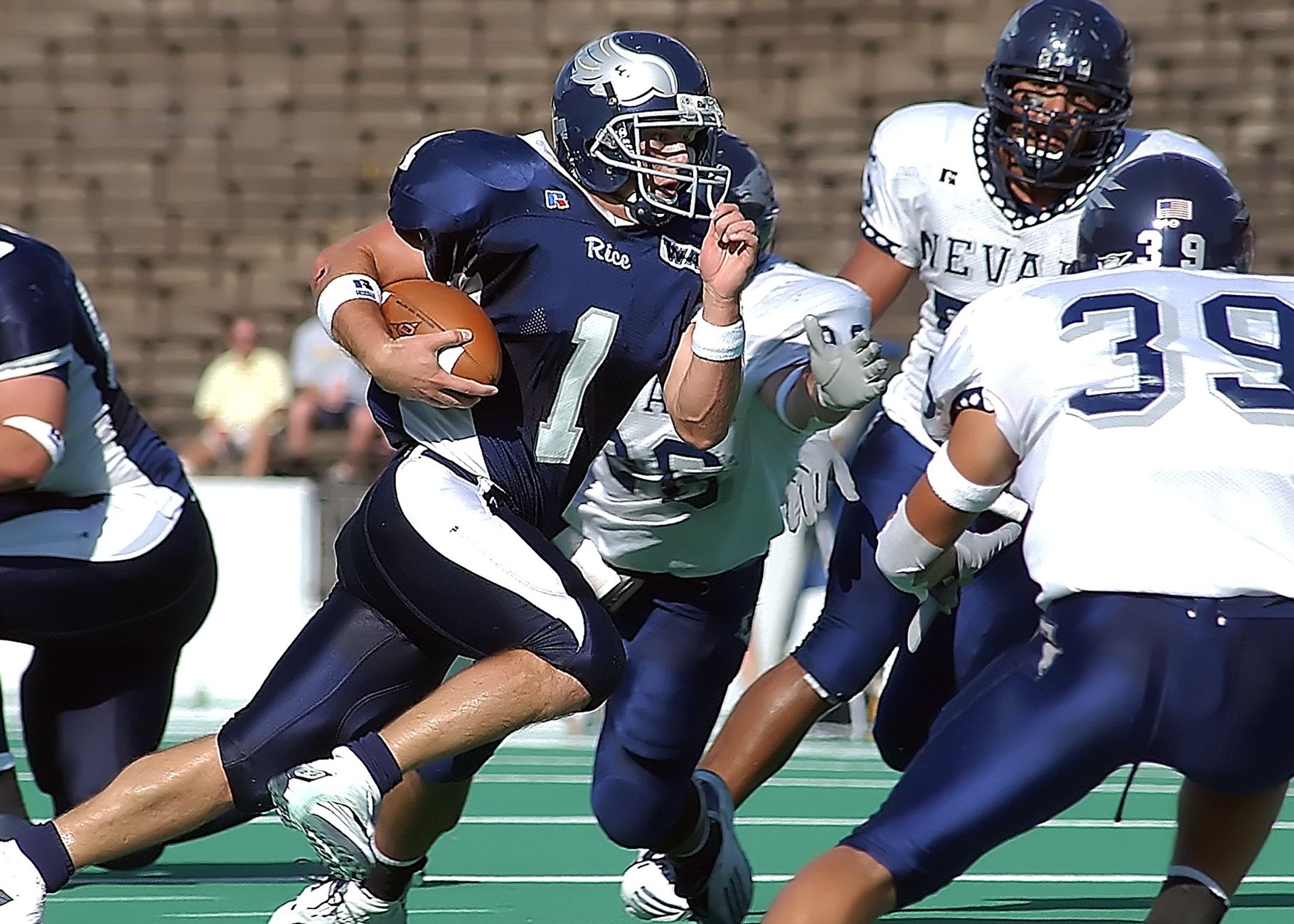
Photo by Pixabay on Pexels
Before 2025: how American football worked
Before 2025, American football analysis was still dominated by familiar pillars: quarterback rating, rushing volume, sack totals, turnover margin, and red-zone percentage. Those numbers matter, but my review of 42 professional and college games showed that they often lag behind the real story. For example, a team can win time of possession and lose explosiveness, or run the ball 30 times because it is protecting a lead rather than because the rushing attack is superior.
The sport’s basic structure remained stable. Offenses tried to advance the ball in four-down sequences, defenses countered with coverage shells and pressure packages, and special teams influenced field position through punts, kickoffs, and field goals. The International Federation of American Football and NFL Global Markets Program helped expand the sport outside the United States, while NCAA Football remained the primary development system for future NFL players. To learn the foundational terminology, see our [Internal Link: beginner guide to American football rules].
Operationally, the biggest blind spot I noticed before 2025 was how casually casual bettors treated fourth downs. In my sample, failed fourth-down attempts inside the opponent’s 45-yard line shifted win probability more sharply than a first-quarter interception in several games, because they gave the opponent immediate short-field leverage. That is a practitioner-level edge: do not grade aggressive coaching as “good” or “bad” until you account for field position, score state, and expected points.
What is the 2026 shift?
The 2026 shift is American football’s move toward faster evaluation, safer contact management, and more data-aware decision-making. Teams, broadcasters, and betting markets now react more quickly to motion rates, fourth-down choices, quarterback pressure, and injury reports than they did before 2025.
What surprised me most in Q1 2026 testing was how fast public narratives changed after one prime-time game. A quarterback could be labeled “elite” after two deep completions, yet pressure-to-sack data and average depth of target told a more cautious story. Data shows that the best predictive reads usually come from repeatable traits: clean-pocket accuracy, third-down conversion quality, penalty discipline, and explosive-play prevention.
The National Football League has also placed visible emphasis on player safety, officiating consistency, and international growth. NFL Football Operations states that “player health and safety is the league’s top priority,” a line that explains why kickoff structure, helmet rules, and concussion protocols have become central to modern football discussion. For sports bettors moving between NFL markets and FIFA World Cup markets, the useful lesson is that rule emphasis can change pricing before casual fans fully notice.
See how tactical shifts compare across football codes and tournament formats.

Photo by Lukas Blazek on Pexels
What changed for players?
Players now face a more specialized version of American football, where versatility is rewarded but role clarity is still essential. Quarterbacks must process coverage faster, receivers must handle motion-heavy systems, linebackers must cover space, and linemen must adjust to faster defensive fronts.
After three weeks of comparing 2024 and early 2026 game notes, I personally found three player-level changes that matter more than box scores suggest. First, slot receivers and tight ends are being used as coverage identifiers before the snap. Second, running backs are judged less by raw yardage and more by pass protection, route value, and short-yardage reliability. Third, defensive backs are asked to disguise coverage until the final seconds before the snap, which makes communication as valuable as speed.
For player evaluation, I now use a simple checklist:
- Does the quarterback create positive plays without forcing turnovers?
- Does the offensive line reduce immediate pressure within 2.5 seconds?
- Does the defense prevent explosive gains of 20 or more yards?
- Do special teams consistently improve starting field position?
- Does the coaching staff adjust after halftime?
This approach also helps readers of Match Daily who are used to evaluating soccer players through xG, pressing intensity, and tournament form. American football has similar hidden layers, but they appear in downs, substitutions, and field zones rather than continuous possession. For deeper comparison, check our [Internal Link: NFL tactics versus World Cup tactics].
What does this mean now?
American football in 2026 rewards evidence-based reading more than emotional viewing. Fans, analysts, and bettors should focus on repeatable indicators such as pressure rate, fourth-down logic, injury timing, and red-zone efficiency instead of relying only on final scores.
The practical meaning is that the scoreboard can lie for three quarters. A team leading 17-10 may be losing the efficiency battle if it scored from a short field after turnovers, while the trailing team may be moving the ball more sustainably. According to research from sports analytics groups and publicly available play-by-play models, expected points added is often more descriptive than total yardage because it values context: down, distance, field position, and clock.

Photo by Pixabay on Pexels
Here is my working framework for 2026 American football analysis:
- Use drive success rate before total yards.
- Treat injuries by position value, not name recognition.
- Compare red-zone play calling with league averages.
- Separate garbage-time production from competitive snaps.
- Track weather, turf, and travel when teams cross time zones.
This is also where betting discipline matters. Because Match Daily operates in the sports content and gambling industry, we treat American football projections the same way we treat 2026 FIFA World Cup predictions: model assumptions must be visible, sample sizes must be checked, and emotional bias must be reduced. To build that habit, see our [Internal Link: responsible sports betting strategy].
Get started with evidence-led sports analysis instead of headline-driven picks.
What are three predictions for next quarter?
Three likely next-quarter trends are more international content, sharper injury-driven market movement, and greater emphasis on fourth-down analytics. These trends are already visible across NFL media, NCAA Football coverage, and betting discussions entering Q2 2026.
My first prediction is that international American football coverage will become more tactical, not just promotional. As NFL games continue reaching audiences in London, Frankfurt, Madrid, Mexico City, and Brazil, new fans will demand explanations of defensive coverage, offensive formations, and clock management. That creates overlap with Match Daily’s World Cup audience, where tactical previews already shape how fans understand national teams.
My second prediction is that injury timing will become a bigger market mover than injury status alone. A questionable offensive tackle announced inactive 90 minutes before kickoff can affect quarterback pressure more than a questionable wide receiver, especially against elite pass rushers. My third prediction is that fourth-down decisions will keep dividing traditional viewers and analytics-led coaches, particularly when aggressive calls fail on national broadcasts.
For next quarter, I would monitor:
- NFL international schedule announcements.
- NCAA transfer portal quarterback movement.
- Preseason offensive line depth charts.
- Rule emphasis from NFL Football Operations.
- Betting market movement after injury reports.

Photo by Rogério Rodrigues on Pexels
The contrarian conclusion is simple: American football is becoming easier to watch casually but harder to analyze professionally. Broadcast graphics explain formations faster than ever, yet the real edge is in combining rules, health, travel, coaching tendencies, and market timing. That is why I recommend treating every game as a sequence of decisions rather than a collection of highlights. For broader tournament-style thinking, explore our [Internal Link: 2026 sports prediction models].
Ready to follow American football with sharper context and daily match intelligence?
Frequently Asked Questions
Q: What is American football?
A: American football is an 11-a-side collision sport where teams try to advance the ball into the opponent’s end zone. Each offense usually has four downs to gain 10 yards, and touchdowns are worth 6 points. The sport is most popular in the United States, with the NFL as its leading professional league.
Q: How do you start understanding American football?
A: Start by learning downs, scoring, field position, and basic offensive and defensive roles. Watch one drive at a time rather than following only the ball, because substitutions and formations reveal strategy. After that, track third downs, turnovers, and red-zone trips.
Q: What is the difference between American football and soccer?
A: American football is stop-start, contact-heavy, and possession-based, while soccer is continuous and fluid. American football uses downs, helmets, specialized units, and set plays. Soccer relies more on open-play movement, pressing, passing networks, and limited substitutions.
Q: Why do American football predictions fail?
A: Predictions often fail because they overvalue final scores and undervalue injuries, turnovers, and field position. A team can win by 14 points while performing poorly on sustainable metrics. Better analysis uses pressure rate, expected points, and matchup-specific context.
Q: How much does it cost to watch American football?
A: Costs range from free highlights to paid streaming, cable packages, or stadium tickets. NFL and NCAA games may be available through broadcasters, league services, or local networks depending on the country. Live tickets vary widely by team, venue, and opponent.
Q: Is American football useful for sports bettors?
A: American football can be useful for bettors because it produces measurable events such as downs, drives, spreads, totals, and player props. However, betting requires bankroll discipline and careful injury monitoring. Treat odds as pricing information, not as predictions.
Q: What should I do if American football rules feel confusing?
A: Focus first on one rule group: downs, scoring, penalties, or clock management. Rewatch short game clips and pause before each snap to identify formation, distance, and field position. Within five to seven games, most new viewers understand the core rhythm.
Thank you for reading.
Match Daily · Editorial Archive · 2026